There is a unique culture in South Korea that locals take completely for granted, but leaves travelers absolutely mind-blown.
It’s the magic of free side dishes, known as Banchan (반찬).
Imagine this: You walk into a Korean BBQ restaurant and order two servings of Samgyeopsal (pork belly).
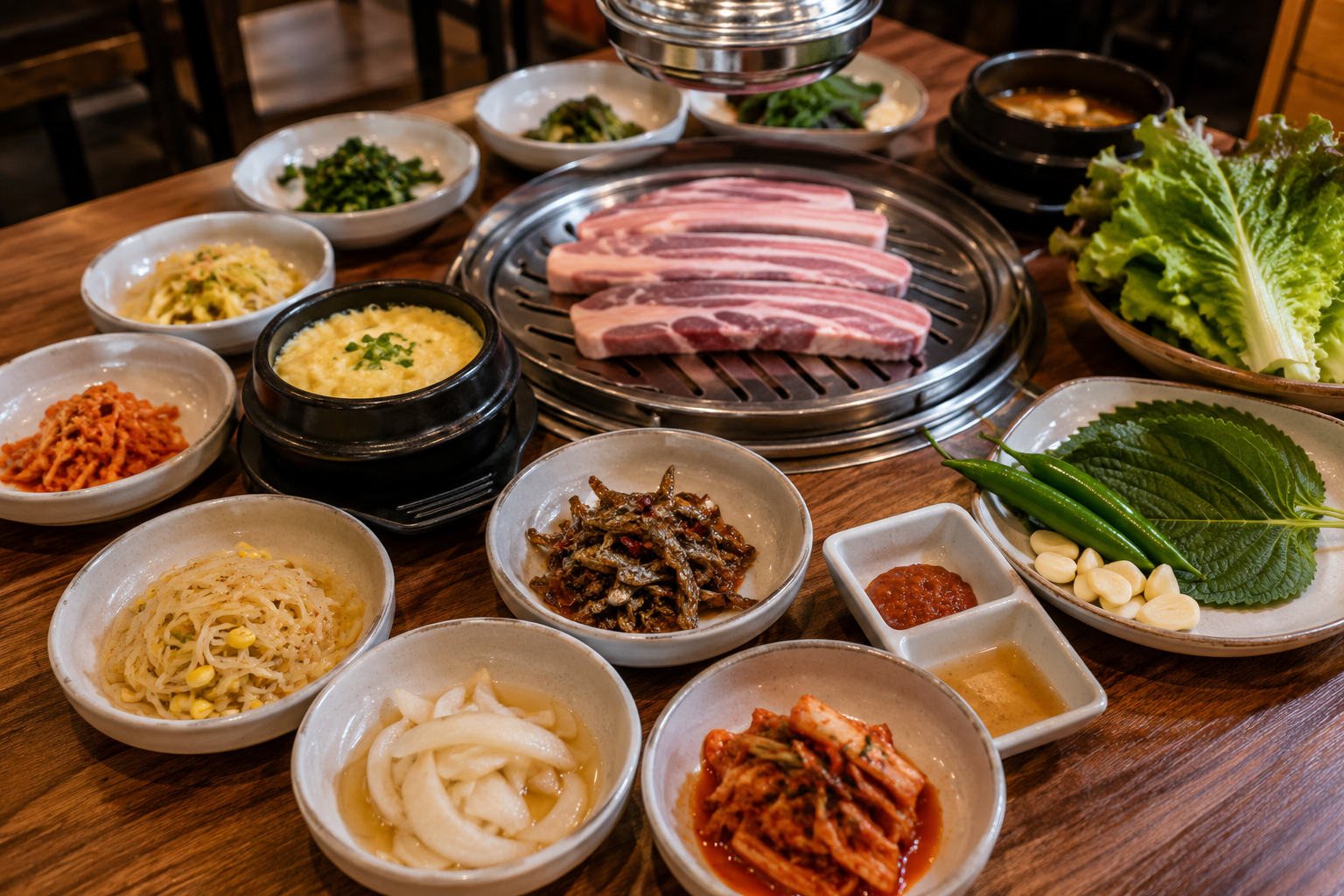
You sit down, wait for your food, and suddenly your table starts filling up with small plates of food.
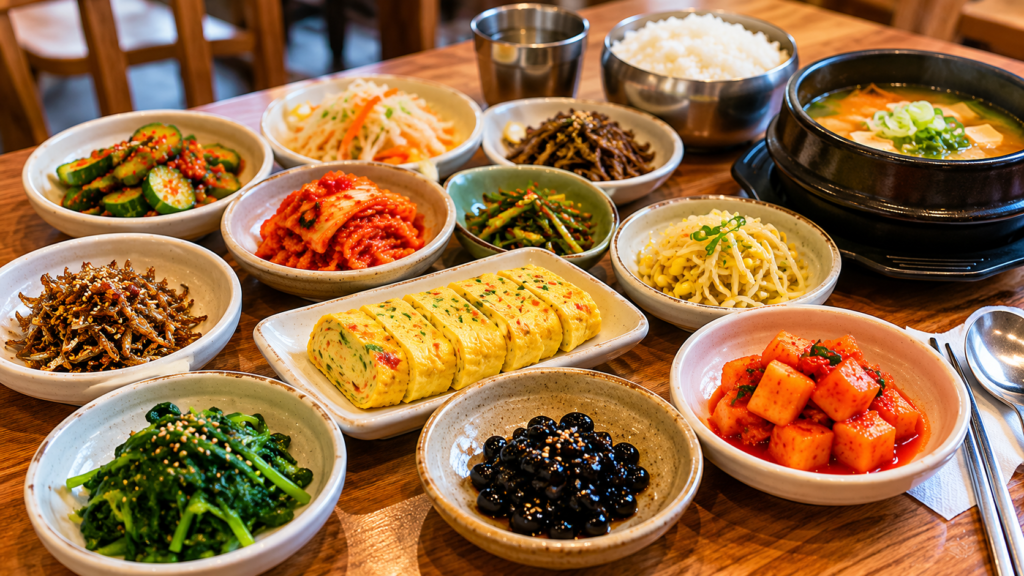
We’re talking Kimchi, seasoned bean sprouts, scallion salad, fresh garlic, Ssamjang (savory dipping sauce), pickled onions, perilla leaves, stir-fried anchovies, spicy dried squid, and even a fluffy, steaming pot of steamed egg (Gyeran-jjim).
The surprising part? Your main dish—the pork belly—hasn’t even hit the grill yet, but your table is already full of food. For Koreans, this is completely normal.
But for foreigners visiting Korea for the first time, the reaction is often the same:
“Wait, did we order this?”
“Nope.”
“So, is it complimentary?”
“Yeah.”
“Wait… so we don’t have to pay for any of this?”
“Not a single penny.”
If you’ve ever shared a meal with foreign friends in Korea, you’ve probably had this exact conversation at least once.
Koreans grow up with this. Whether you go out to eat with your family or grab a meal with friends, Banchan simply appears on the table. Because it’s such a normal part of everyday dining, most locals don’t even realize how unusual it can seem to visitors.
In many countries, restaurants typically serve only the items listed on the menu. That’s why Korea’s side-dish culture often feels surprisingly generous to first-time visitors.
What surprises visitors even more is that the experience doesn’t stop there.
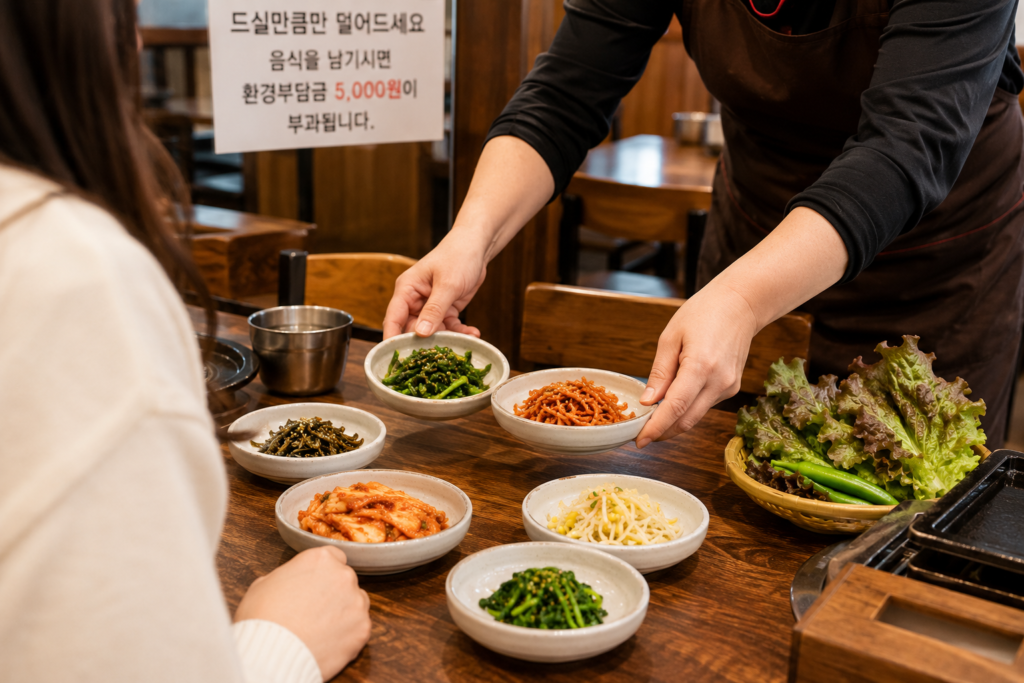
Once you finish your side dishes, most traditional Korean restaurants will happily refill them for free.
Let’s say you finished the Kimchi, stir-fried anchovies, or rolled omelet. All you have to do is ask:
“Banchan jogeum-man deo juseyo.”
(Can we get a little more side dishes, please?)
A moment later, the server brings another serving at no extra charge.
For Koreans, it’s completely ordinary. For many travelers, it’s a second culture shock.
Lately, though, the way restaurants operate has started to change a little.
While asking staff directly used to be the most common method, self-service bars are now easy to find, especially at Korean BBQ restaurants.
These stations are often stocked with lettuce, perilla leaves, Kimchi, bean sprouts, pickled onions, garlic, chili peppers, and various sauces.
Customers simply take what they need and return to their table.
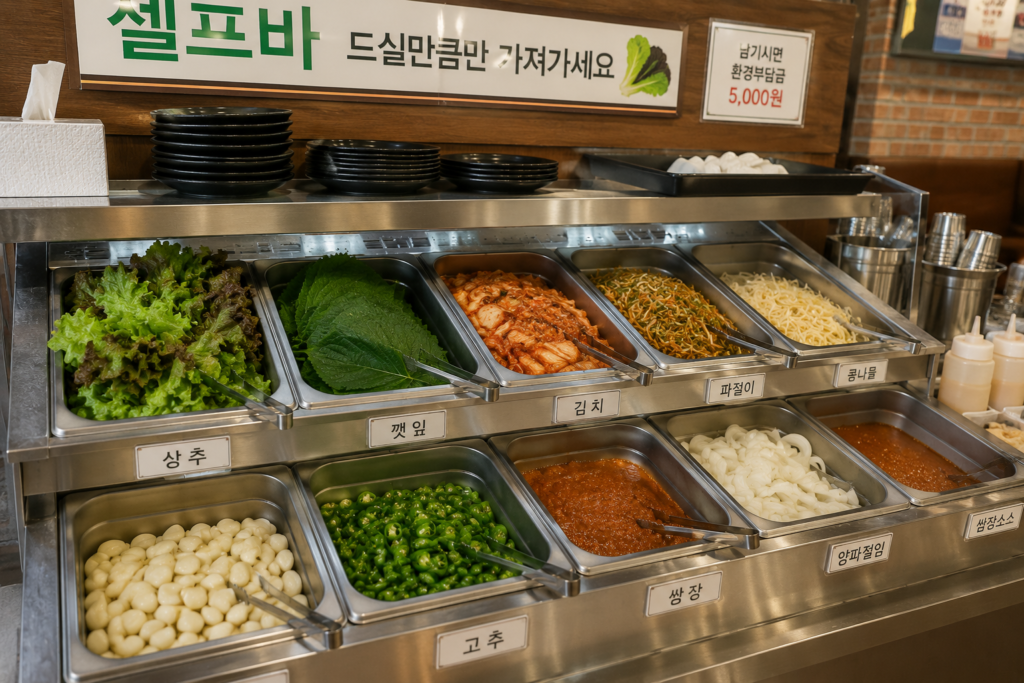
One thing many visitors notice at Korean BBQ restaurants is how freely people use the self-service bar.
It is common to see customers returning several times for more lettuce, Kimchi, garlic, or sauces throughout the meal.
In Korea, nobody thinks twice about it.
The goal is not simply to eat meat, but to create different combinations and flavors with every bite.
That is one reason Korean meals often feel more interactive than many visitors expect.
Growing up in Korea, I rarely thought about Banchan at all. It was simply part of every meal.
Whether eating with family, meeting friends after work, or visiting a small local restaurant, side dishes were always there.
It wasn’t until I started dining with foreign friends that I realized how unusual this culture can seem from the outside.
Some of them were hesitant to touch the side dishes at first because they assumed they would be charged separately later.
Others thought the restaurant accidentally brought food meant for another table.
For Koreans, those reactions can be surprisingly funny because Banchan feels as normal as receiving a glass of water.
In fact, to many Koreans, the idea of eating only one dish can actually feel a little strange.
If you order Samgyeopsal, you naturally expect Kimchi, garlic, Ssamjang, and vegetables to be on the table as well.
If those side dishes never arrived, many Koreans would probably feel that something was missing.
Instead of eating a single dish by itself, meals are often enjoyed with different flavors, textures, and side dishes shared around the table. It helps turn a simple meal into something much more enjoyable.
Of course, rising food prices and labor costs have brought some changes as well.
Some restaurants now charge a small table-setting fee, while others may limit refills on certain side dishes.
Even so, free Banchan remains a common part of dining culture across Korea.
Many visitors remember Korean BBQ, Kimchi, or fried chicken long after their trip is over.
But sometimes, the thing they remember most is much smaller.
It’s the moment when a table suddenly fills with food they never ordered, and everyone around them acts as if nothing unusual happened.
Leave a Reply