Tag: South Korea

  • The Korean BBQ Ritual That Surprises Foreigners: The Art of Ssam

    The Korean BBQ Ritual That Surprises Foreigners: The Art of Ssam

    There is a fascinating ritual that happens at every Korean BBQ table.
    If you visit a Samgyeopsal (pork belly) restaurant in Korea for the first time, you will witness a scene that looks like a delicious, high-stakes game of Jenga.
    It’s the art of “Ssam” (쌈)—the unique Korean culture of wrapping food in leafy vegetables.
    To Koreans, this is second nature. But to travelers, watching locals construct and consume a wrap is nothing short of a theatrical performance. They don’t just eat the meat; they build an entire flavor universe inside a single leaf.

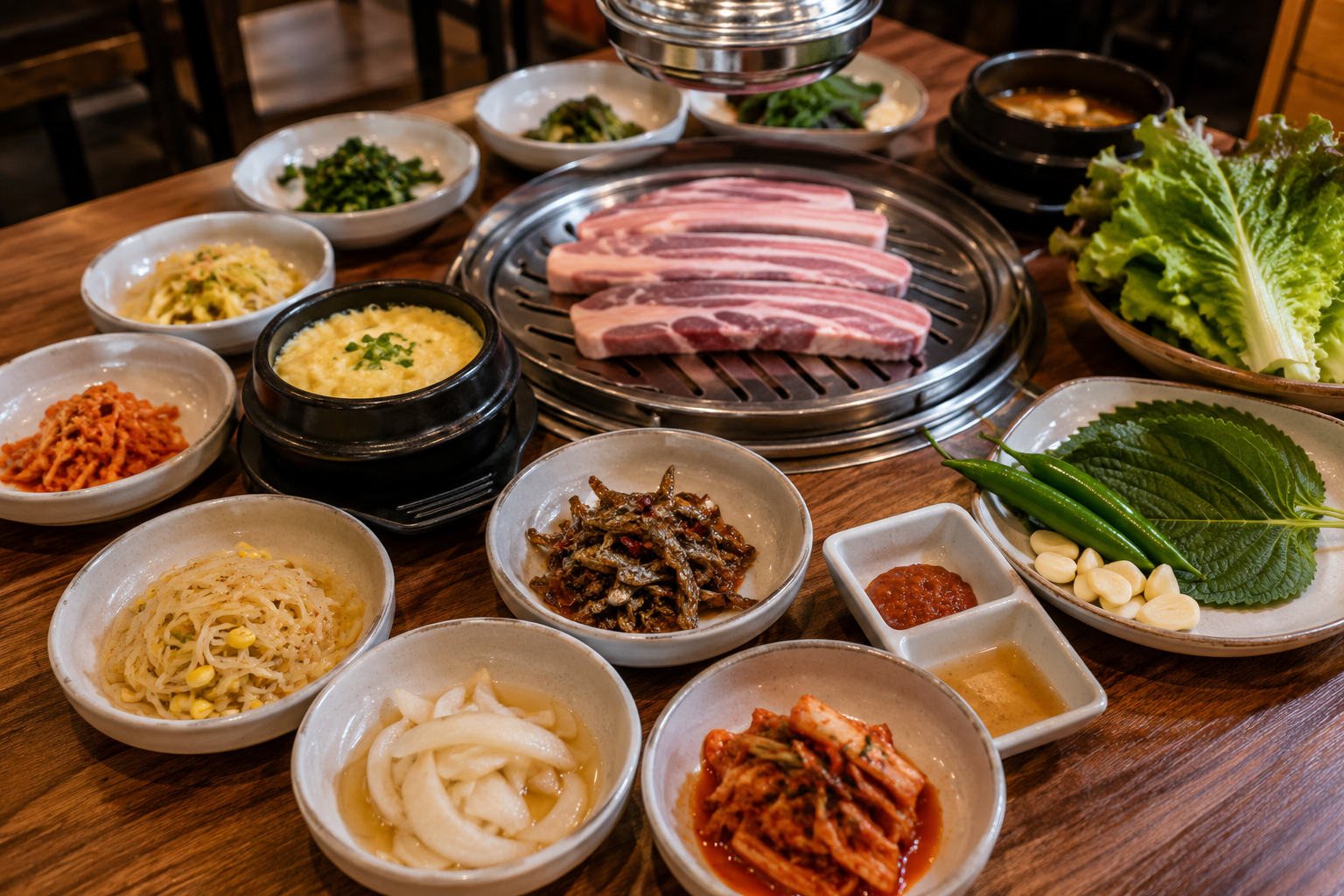
    A Korean BBQ table set with fresh lettuce, perilla leaves, pork belly, garlic, kimchi, and traditional side dishes for making ssam.

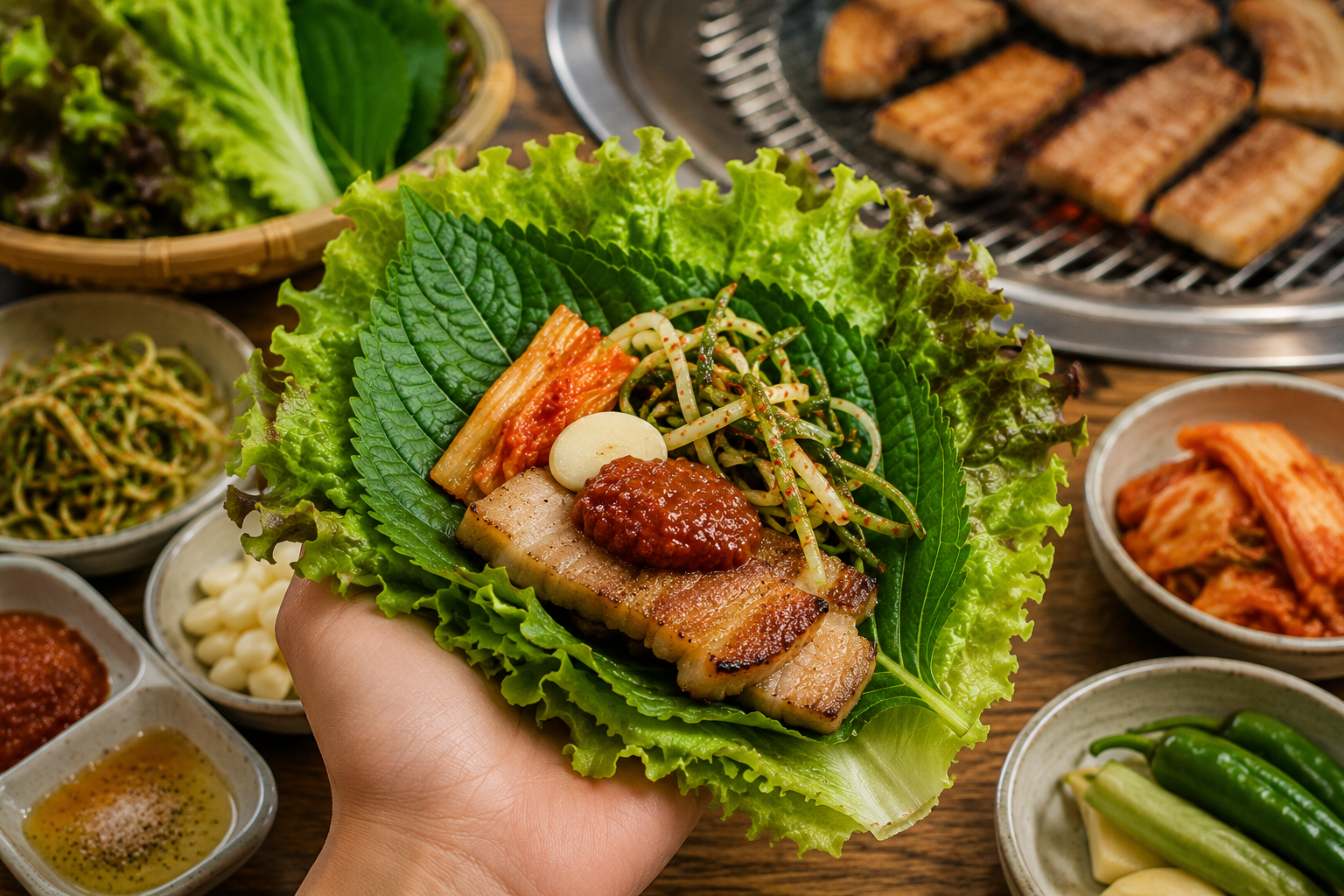
    Imagine this: a Korean diner picks up a piece of lettuce or a perilla leaf. Then, the layering begins. First goes a thick piece of grilled pork belly. Next, a dollop of Ssamjang (savory, fermented bean sauce). Then comes a slice of raw or grilled garlic, followed by a strip of spicy scallion salad, and maybe a piece of grilled Kimchi. Some people even add a small spoonful of hot rice. By the time the masterpiece is finished, the wrap is easily the size of a small fist. And this is the exact moment where first-time visitors gasp.

    “Are they really going to eat that in one bite?” “There’s no way that fits.”

    Large Korean ssam wrap with grilled pork belly, perilla leaf, garlic, and ssamjang at a Korean BBQ restaurant.

    But before they can finish the thought, the Korean diner opens their mouth incredibly wide and pops the entire, giant wrap inside in one clean motion. No biting it in half, no dropping a single ingredient. To an outsider, it looks impossible, almost aggressive. But to Koreans, eating a Ssam in one bite is the ultimate satisfaction. The magic lies in the explosion of flavors. The moment you chew, the richness of the pork, the salty punch of the Ssamjang, the sharp kick of garlic, and the fresh crunch of the lettuce all combine in your mouth at once. If you bite it in half, the juices leak out, the structure collapses, and the magic is lost.

    This culture is so deeply rooted that most Koreans feel a strange sense of emptiness if they eat grilled meat without wrapping it. Some people believe that the tradition may be connected to “Bokssam” (wrapping luck), a custom in which people wrapped rice in seaweed or leafy greens during the Lunar New Year to wish for good fortune. Later, during times when meat was scarce, wrapping a small piece of pork with plenty of vegetables was a practical way to feed a whole family while making meals feel more satisfying and balanced.

    A Korean BBQ restaurant salad bar offering a variety of fresh ssam vegetables and leafy greens.

    Today, the obsession with Ssam has created a fun divide among locals: The Lettuce Team versus The Perilla Leaf Team. Those who prefer lettuce love it for its clean, refreshing crunch that lets the flavor of the meat shine. On the other hand, the Perilla Leaf (Kkaen-nip) loyalists argue that its unique, herbal, and slightly minty aroma is what elevates Korean BBQ to the next level. Some hardcore foodies won’t even touch a piece of pork belly if perilla leaves aren’t on the table. And it doesn’t stop at just these two. If you venture deeper into Korean dining, you’ll encounter greens like Dangwi (Korean angelica), which has a strong, medicinal herbal scent that can be surprising at first but is something many Koreans grow to enjoy over time, as well as kale, chicory, and romaine.

    The best part about Ssam culture? There is absolutely no right or wrong answer. Whether you stack three leaves together, double up on garlic, or skip the rice entirely, it’s a culinary sandbox where you are the chef of your own bite. The culture is still evolving today—with people wrapping raw fish (Hoe), using pickled radish slices (Ssam-mu), or even experimenting with fusion styles like using tortillas.

    So, when you find yourself at a Korean BBQ restaurant, don’t be shy. Grab a leaf, pile it high with whatever catches your eye, open your mouth as wide as you can, and dive into the beautiful, chaotic, and delicious world of Ssam.

    Now I’m curious. Have you ever tried making a Korean Ssam? What is your ultimate combination of ingredients? 🍖🥬

  • “Wait, I Didn’t Order This!” — Why Korean Side Dishes Are Free

    “Wait, I Didn’t Order This!” — Why Korean Side Dishes Are Free

    There is a unique culture in South Korea that locals take completely for granted, but leaves travelers absolutely mind-blown.
    It’s the magic of free side dishes, known as Banchan (반찬).
    Imagine this: You walk into a Korean BBQ restaurant and order two servings of Samgyeopsal (pork belly).
    You sit down, wait for your food, and suddenly your table starts filling up with small plates of food.

    We’re talking Kimchi, seasoned bean sprouts, scallion salad, fresh garlic, Ssamjang (savory dipping sauce), pickled onions, perilla leaves, stir-fried anchovies, spicy dried squid, and even a fluffy, steaming pot of steamed egg (Gyeran-jjim).
    The surprising part? Your main dish—the pork belly—hasn’t even hit the grill yet, but your table is already full of food. For Koreans, this is completely normal.
    But for foreigners visiting Korea for the first time, the reaction is often the same:

    A server placing complimentary Korean side dishes on a restaurant table.

    “Wait, did we order this?”

    “Nope.”

    “So, is it complimentary?”

    “Yeah.”

    “Wait… so we don’t have to pay for any of this?”

    “Not a single penny.”

    If you’ve ever shared a meal with foreign friends in Korea, you’ve probably had this exact conversation at least once.
    Koreans grow up with this. Whether you go out to eat with your family or grab a meal with friends, Banchan simply appears on the table. Because it’s such a normal part of everyday dining, most locals don’t even realize how unusual it can seem to visitors.
    In many countries, restaurants typically serve only the items listed on the menu. That’s why Korea’s side-dish culture often feels surprisingly generous to first-time visitors.

    What surprises visitors even more is that the experience doesn’t stop there.
    Once you finish your side dishes, most traditional Korean restaurants will happily refill them for free.
    Let’s say you finished the Kimchi, stir-fried anchovies, or rolled omelet. All you have to do is ask:
    “Banchan jogeum-man deo juseyo.”
    (Can we get a little more side dishes, please?)
    A moment later, the server brings another serving at no extra charge.
    For Koreans, it’s completely ordinary. For many travelers, it’s a second culture shock.

    Lately, though, the way restaurants operate has started to change a little.
    While asking staff directly used to be the most common method, self-service bars are now easy to find, especially at Korean BBQ restaurants.
    These stations are often stocked with lettuce, perilla leaves, Kimchi, bean sprouts, pickled onions, garlic, chili peppers, and various sauces.
    Customers simply take what they need and return to their table.

    A self-service side dish bar commonly found in Korean BBQ restaurants.

    One thing many visitors notice at Korean BBQ restaurants is how freely people use the self-service bar.
    It is common to see customers returning several times for more lettuce, Kimchi, garlic, or sauces throughout the meal.
    In Korea, nobody thinks twice about it.
    The goal is not simply to eat meat, but to create different combinations and flavors with every bite.
    That is one reason Korean meals often feel more interactive than many visitors expect.

    Growing up in Korea, I rarely thought about Banchan at all. It was simply part of every meal.
    Whether eating with family, meeting friends after work, or visiting a small local restaurant, side dishes were always there.
    It wasn’t until I started dining with foreign friends that I realized how unusual this culture can seem from the outside.
    Some of them were hesitant to touch the side dishes at first because they assumed they would be charged separately later.
    Others thought the restaurant accidentally brought food meant for another table.
    For Koreans, those reactions can be surprisingly funny because Banchan feels as normal as receiving a glass of water.

    In fact, to many Koreans, the idea of eating only one dish can actually feel a little strange.
    If you order Samgyeopsal, you naturally expect Kimchi, garlic, Ssamjang, and vegetables to be on the table as well.
    If those side dishes never arrived, many Koreans would probably feel that something was missing.
    Instead of eating a single dish by itself, meals are often enjoyed with different flavors, textures, and side dishes shared around the table. It helps turn a simple meal into something much more enjoyable.

    Of course, rising food prices and labor costs have brought some changes as well.
    Some restaurants now charge a small table-setting fee, while others may limit refills on certain side dishes.
    Even so, free Banchan remains a common part of dining culture across Korea.

    Free side dish refills are a common part of Korean dining culture.

    Many visitors remember Korean BBQ, Kimchi, or fried chicken long after their trip is over.

    But sometimes, the thing they remember most is much smaller.

    It’s the moment when a table suddenly fills with food they never ordered, and everyone around them acts as if nothing unusual happened.