Blog

  • Why Do Koreans Visit Convenience Stores So Often?

    Why Do Koreans Visit Convenience Stores So Often?

    One of the first things many foreign visitors notice in Korea is the number of convenience stores. No matter where you go, there always seems to be one nearby. There is a convenience store on the way to school. There is one near the bus stop, another near the office, and usually at least one…

    One of the first things many foreign visitors notice in Korea is the number of convenience stores. No matter where you go, there always seems to be one nearby. There is a convenience store on the way to school. There is one near the bus stop, another near the office, and usually at least one inside or next to a residential apartment complex. Sometimes it feels like you can walk for only a few minutes before spotting another one. That is probably one of the biggest reasons Koreans visit convenience stores so often. They are simply everywhere.

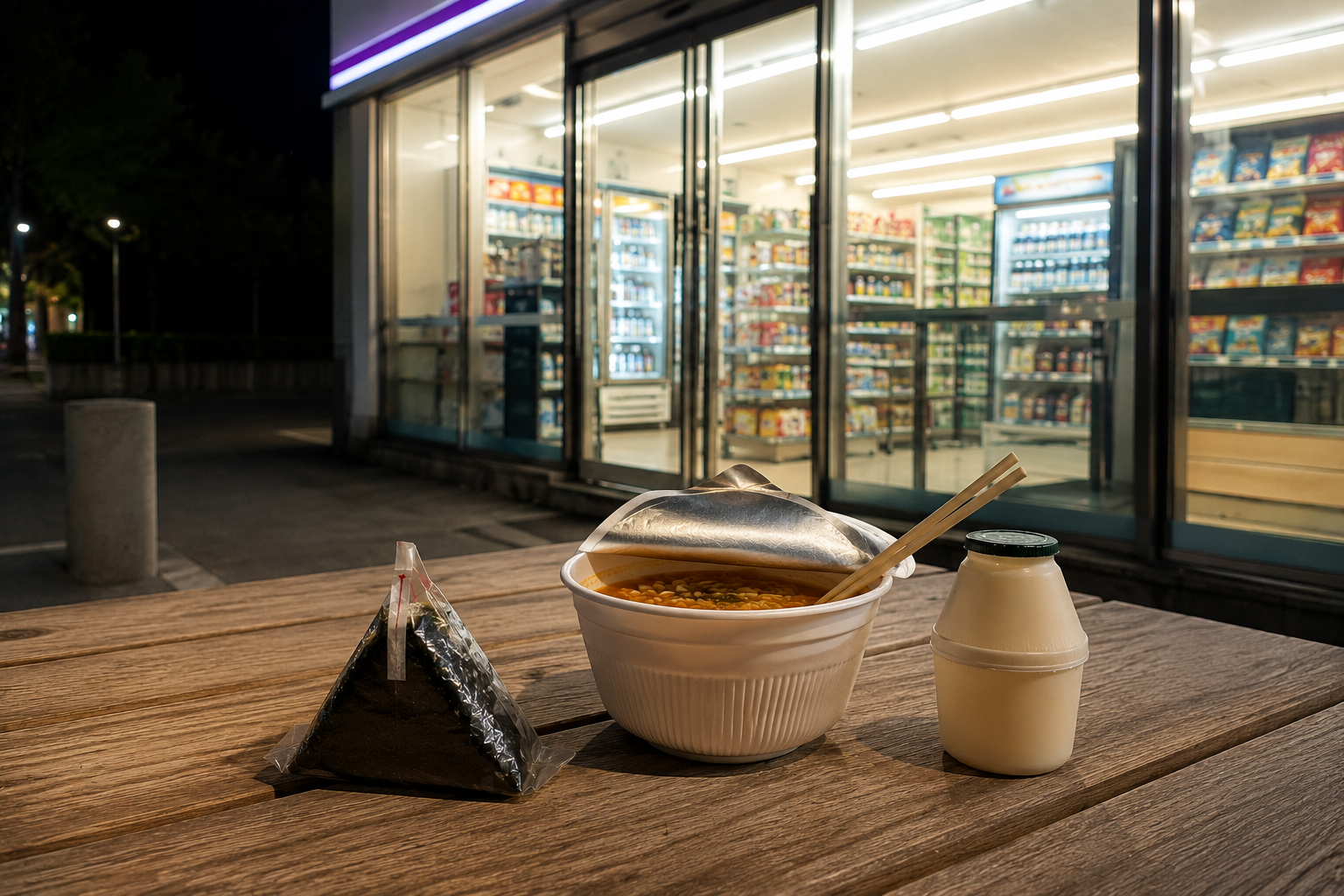
    For students, convenience stores are often part of their daily routine. Many Korean students attend private academies after school, which means they do not always have enough time for a proper meal before heading to their next class. A convenience store becomes an easy solution. Most stores have tables where customers can sit and eat. There are microwaves for heating food and hot water dispensers for instant noodles. It is common to see students grabbing a triangle kimbap, a cup of ramen, or a simple ready-made meal before rushing off to an academy.
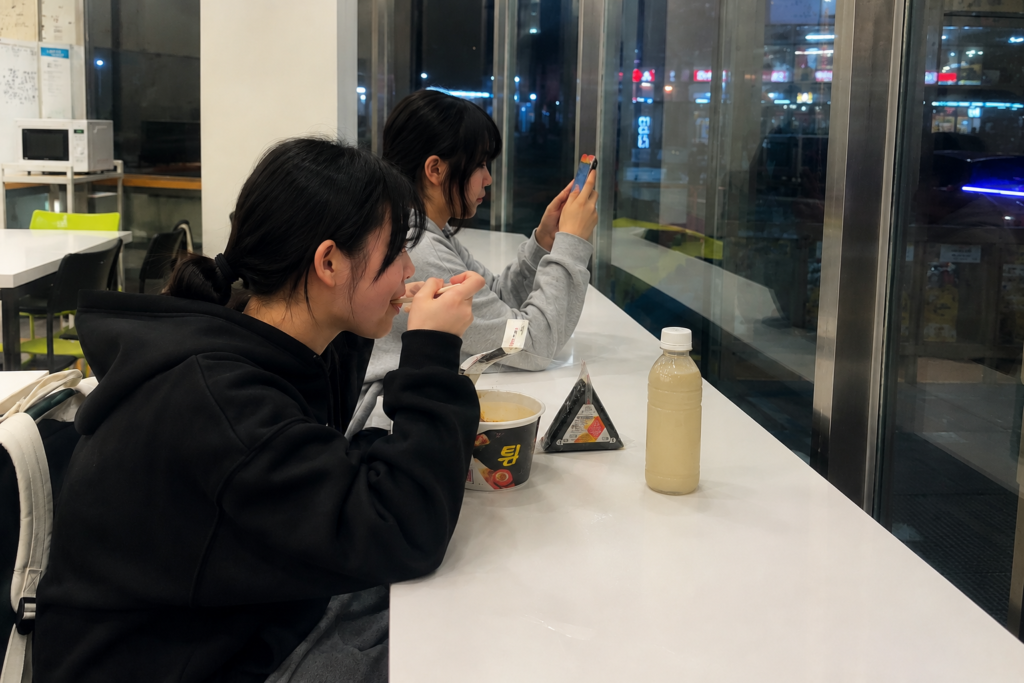
    Korean students eating instant ramen and triangle kimbap at a convenience store seating area.

    Office workers have their own reasons for stopping by. Someone who skipped breakfast might walk into a convenience store on the way to work and think, “Maybe I’ll just grab a triangle kimbap and a coffee.” It is a quick, affordable way to get through a busy morning.

    Convenience stores are also popular after work. Sometimes people get home, look inside the refrigerator, and realize they do not feel like cooking. Instead, they head downstairs to the nearest convenience store and pick up a lunch box, instant noodles, or a few snacks for dinner. Convenience store lunch boxes are especially popular in Korea. For just a few thousand won, you can get rice, meat, and several side dishes in one meal. Students, office workers, and even elderly customers regularly buy them.

    Late at night, convenience stores become useful in a different way. After spending time with friends and having a few drinks, many people stop by a convenience store before going home. Some buy a hangover relief drink. Others grab a cup of ramen and sit down for a quick late-night meal before heading home. Because most convenience stores operate 24 hours a day, they remain one of the few places that stay open when almost everything else is closed.
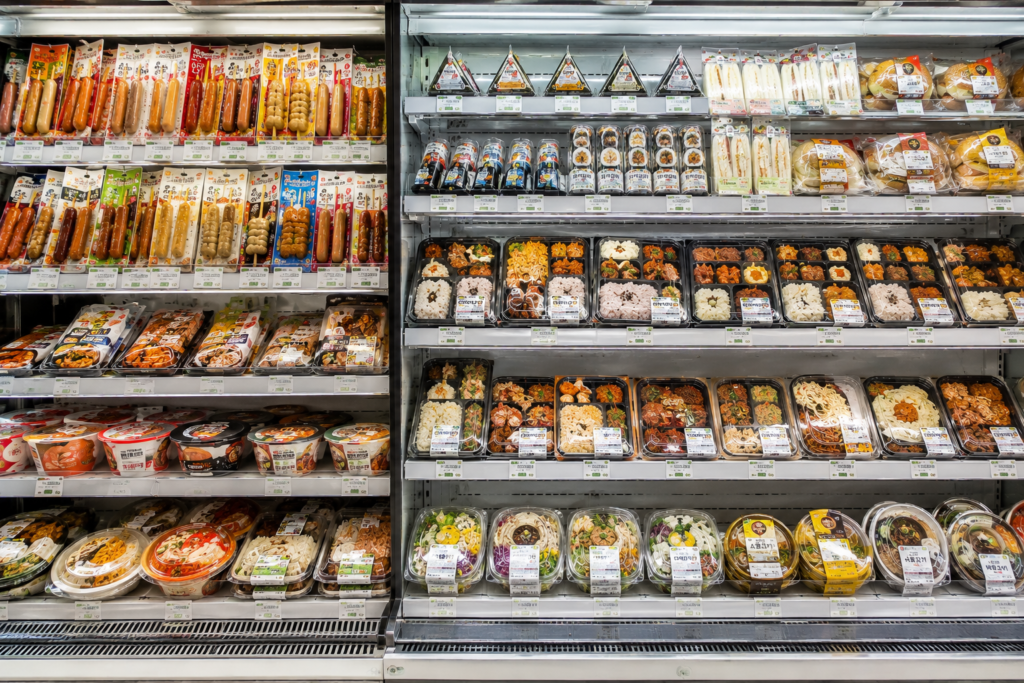
    Korean convenience store refrigerated section featuring lunch boxes, kimbap, sandwiches, and ready-to-eat meals.

    They can even be helpful when unexpected situations happen. If you suddenly need basic medicine late at night and nearby pharmacies are already closed, many convenience stores sell common over-the-counter essentials.

    Another interesting part of Korean convenience store culture is the famous “1+1” and “2+1” promotions. These deals are especially common in the drink section. Many people walk into a convenience store planning to buy one drink and leave with two. You will often hear friends saying, “Hey, this one is 1+1. Want the extra one?” Sometimes they even play rock-paper-scissors to decide who pays. It is a small moment, but a very familiar one for many Koreans.

    Korea has several major convenience store brands, including CU, GS25, 7-Eleven, and Emart24. These companies constantly compete by releasing new lunch boxes, desserts, drinks, and limited-edition products. As a result, many people stop by convenience stores not because they need something, but simply because they are curious about what is new.
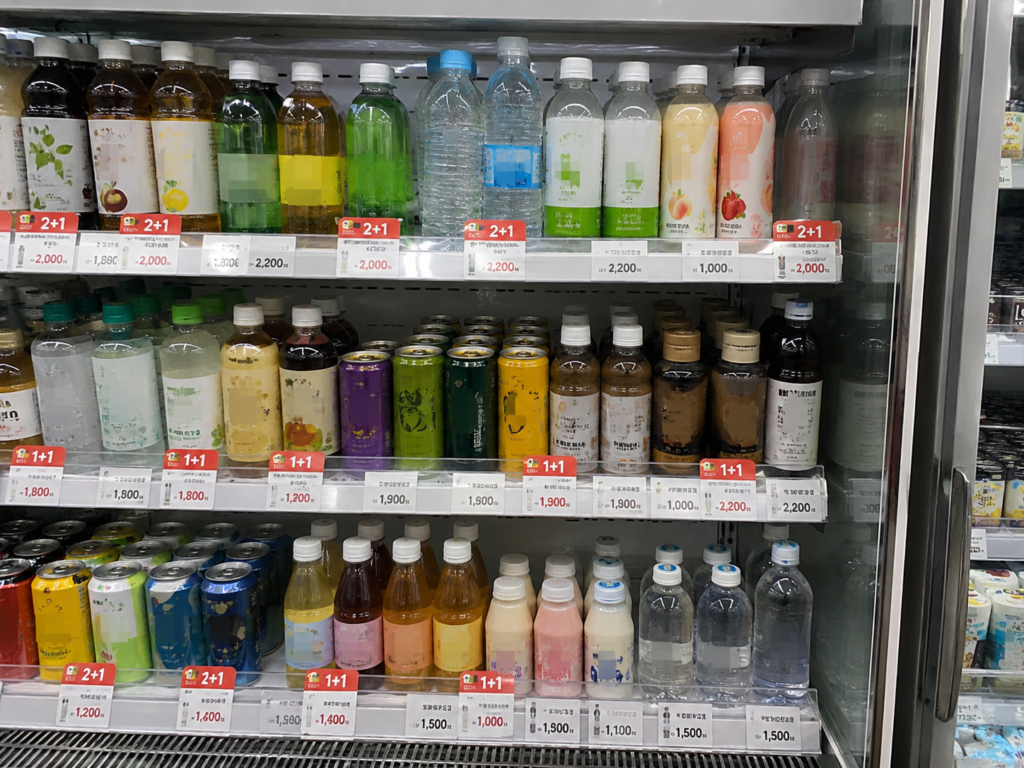
    Beverage shelf with 1+1 and 2+1 promotions in a Korean convenience store.

    For Koreans, convenience stores are not considered special places. They are simply part of everyday life. When people are hungry, thirsty, in a hurry, or suddenly need something, a convenience store is often the first place that comes to mind. Perhaps Koreans visit convenience stores so often not because they are extraordinary, but because they are always there when needed.

    If you ever visit Korea, try counting how many convenience stores you pass during a ten-minute walk. The number might surprise you.
  • Why Do Koreans Order Food Delivery for Everything?

    Why Do Koreans Order Food Delivery for Everything?

    Many Koreans have a habit of opening a delivery app before opening the refrigerator. After a long day at work, people often check delivery apps on their way home while thinking about what to eat for dinner. When friends are hanging out at someone’s house and start getting hungry, there is usually one sentence that…

    Many Koreans have a habit of opening a delivery app before opening the refrigerator. After a long day at work, people often check delivery apps on their way home while thinking about what to eat for dinner. When friends are hanging out at someone’s house and start getting hungry, there is usually one sentence that comes up sooner or later. “Should we order delivery?”

    Weekends are not much different. Many people wake up late, check the messages on their phone, rub their stomach, and instinctively open a delivery app. “What should I eat?” For many Koreans, this is a very familiar routine.

    The reason food delivery became so popular in Korea is actually quite simple. It’s incredibly convenient. Years ago, people had to call restaurants directly to place an order. Today, almost everything can be done through a single app. You can browse nearby restaurants, choose your food, pay for it, and have it delivered without making a single phone call. Fried chicken, pizza, Korean stews, coffee, desserts, and even convenience store items can all be delivered.

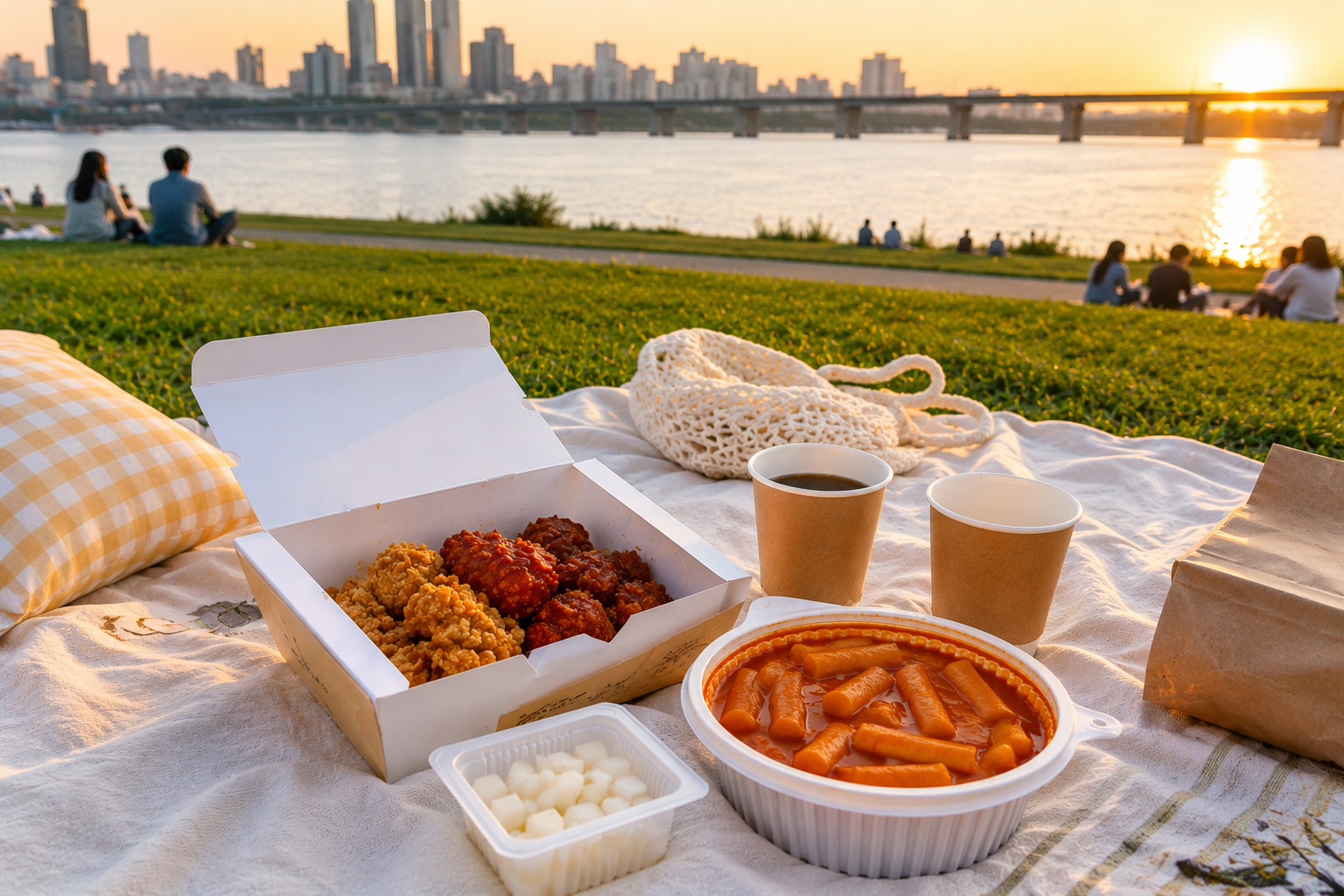
    One thing that surprises many foreign visitors is where delivery can happen. In Korea, food delivery is not limited to your home. Imagine sitting on a picnic mat with friends at Han River Park in Seoul and suddenly craving fried chicken. Many people simply open a delivery app and order food right to the park. There are even designated delivery zones in some areas to make the process easier. Seeing delivery bikes arrive at an open riverside park carrying hot food is something many first-time visitors find fascinating.

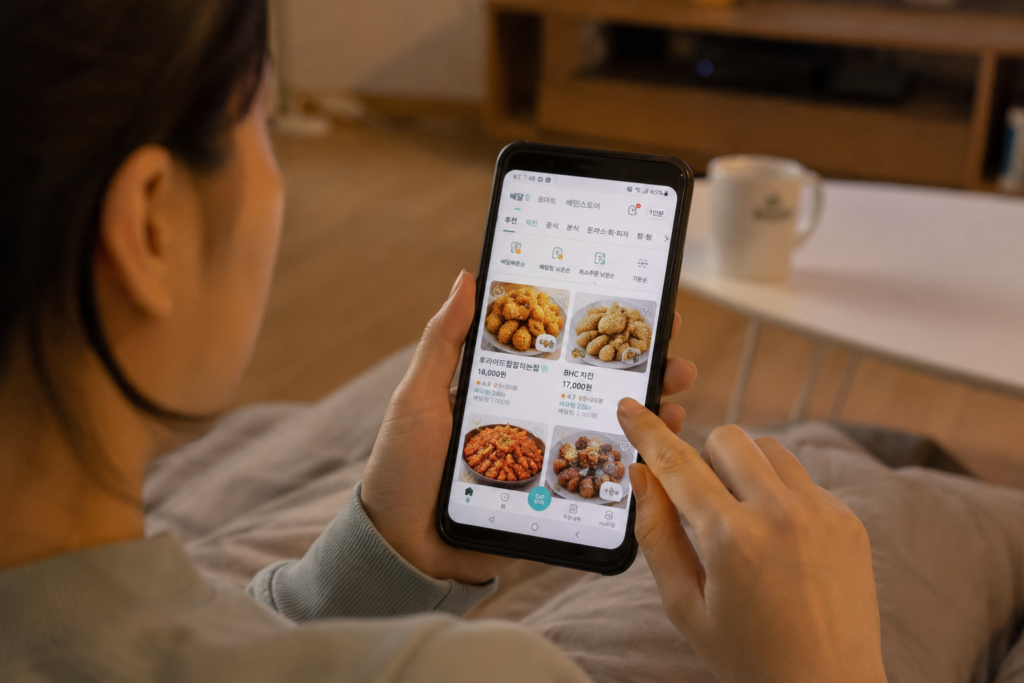
    Korean customer browsing a food delivery app to order dinner after work.

    Korean delivery culture also has an interesting feature called a review event. Many restaurants offer free drinks, extra side dishes, or small bonus items if customers agree to leave a review after the meal. The interesting part is that these extras are usually included before the review is even written. It is a marketing strategy, of course, but it also reflects a certain level of trust between the restaurant and the customer.

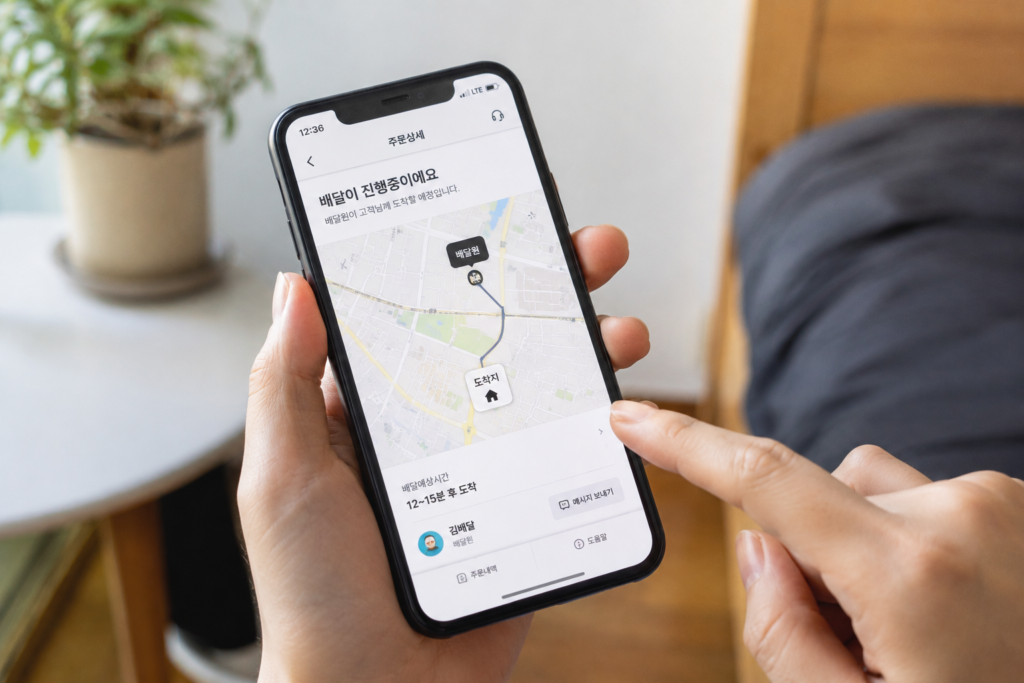
    The waiting process is surprisingly entertaining too. After placing an order, customers can see whether the restaurant has accepted it, whether the food is being prepared, whether the driver has picked it up, and exactly where the driver is on the map. As a result, many Koreans find themselves checking their phones repeatedly while waiting. “The driver just picked it up.” “Looks like it’s almost here.” “Wait… why is he going that way?”

    Real-time delivery tracking feature used in Korean food delivery apps.

    I actually had that experience myself once. A delivery driver picked up my order and then started moving in the complete opposite direction from my home. At first, I thought he had taken a wrong turn. Later, I realized he was picking up another order before heading my way. My food arrived later than expected, so I contacted customer support and eventually received a discount coupon.

    That is another convenient part of the system. If there is a problem with your order, such as missing items or a delivery mistake, you can usually contact the restaurant or customer service directly. Depending on the situation, you may receive a refund, a replacement order, or compensation in the form of coupons.

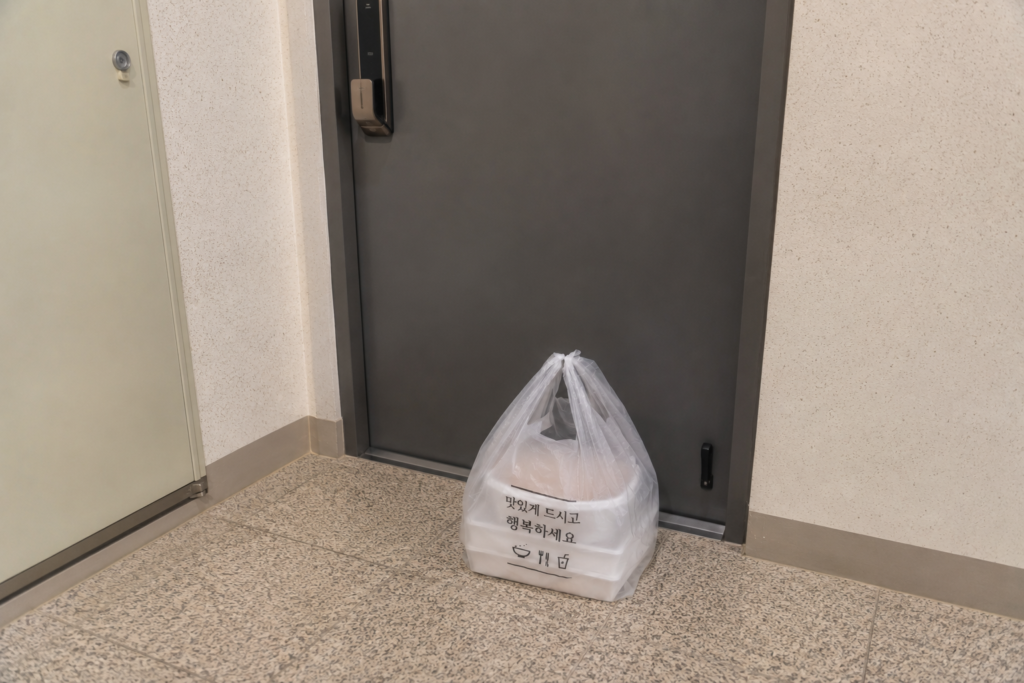
    Perhaps Korea’s famous “ppalli-ppalli” culture and delivery services are simply a perfect match. And then, finally, the doorbell rings. When you open the door, a warm bag of food is waiting outside. It is a simple moment, but a surprisingly satisfying one. By the time the food reaches the table, most people have already decided which item they are going to eat first.

    Korean food delivery left neatly outside an apartment door.

    For Koreans, delivery is not considered a special service. It has simply become part of everyday life. Whether it is after work, during a lazy weekend at home, or while relaxing by the Han River, many people naturally reach for a delivery app when they get hungry. What may seem surprisingly convenient to foreign visitors is simply another normal day in Korea.

    Now I’m curious. How is the food delivery system in your country? Do people use it as often as Koreans do?

  • Why Do Koreans Eat Hot Chicken Soup in Summer?

    Why Do Koreans Eat Hot Chicken Soup in Summer?

    When the weather gets hot, most people naturally look for something cold. An iced drink, cold noodles, or anything that can help them cool down sounds like the obvious choice. That is why many foreign visitors are surprised when they discover one of Korea’s most popular summer foods is actually a steaming hot bowl of…

    When the weather gets hot, most people naturally look for something cold. An iced drink, cold noodles, or anything that can help them cool down sounds like the obvious choice. That is why many foreign visitors are surprised when they discover one of Korea’s most popular summer foods is actually a steaming hot bowl of chicken soup.

    The dish is called Samgyetang. And every summer, millions of Koreans eat it on purpose.

    The reason comes from an old Korean concept called iyeolchiyeol (이열치열), which roughly means “fight heat with heat.” The idea is simple. Instead of avoiding the heat, you face it directly. Many Koreans believe that eating hot, nourishing food during the hottest time of the year helps restore energy and makes it easier to endure the summer heat. Whether that sounds logical or not, it has been part of Korean food culture for generations.

    This tradition is especially connected to three specific days during summer known as Chobok, Jungbok, and Malbok. Together, they are commonly called Boknal (복날), the three hottest periods of the year.

    As summer approaches, conversations about Samgyetang start appearing everywhere. At work, it is common to hear a coworker say, “It’s getting hot these days. We should get something nourishing. How about Samgyetang for lunch?”

    The same thing happens among friends. “Want to go get some Samgyetang? We need to build up our energy before the heat gets worse.”

    For many Koreans, Samgyetang is one of the first foods that comes to mind when the weather starts becoming unbearably hot.

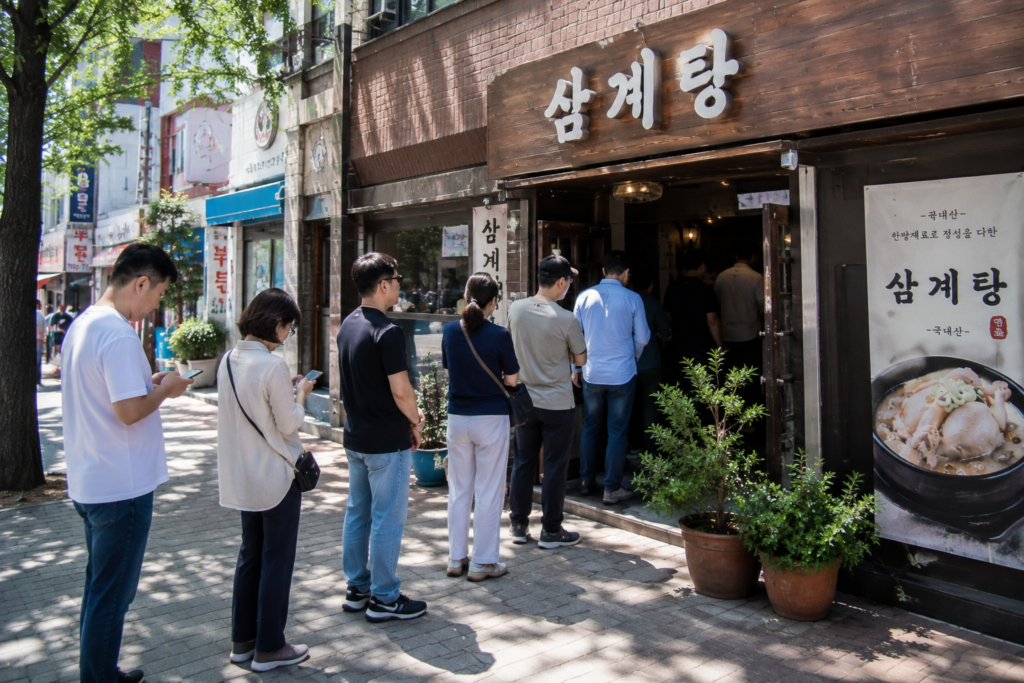
    On Boknal, Samgyetang restaurants are often packed. Places that are normally quiet can suddenly become difficult to get into, and long lines are not unusual. That alone shows how seriously many Koreans take this summer tradition.

    People waiting in line outside a popular Korean samgyetang restaurant during the summer Boknal season.

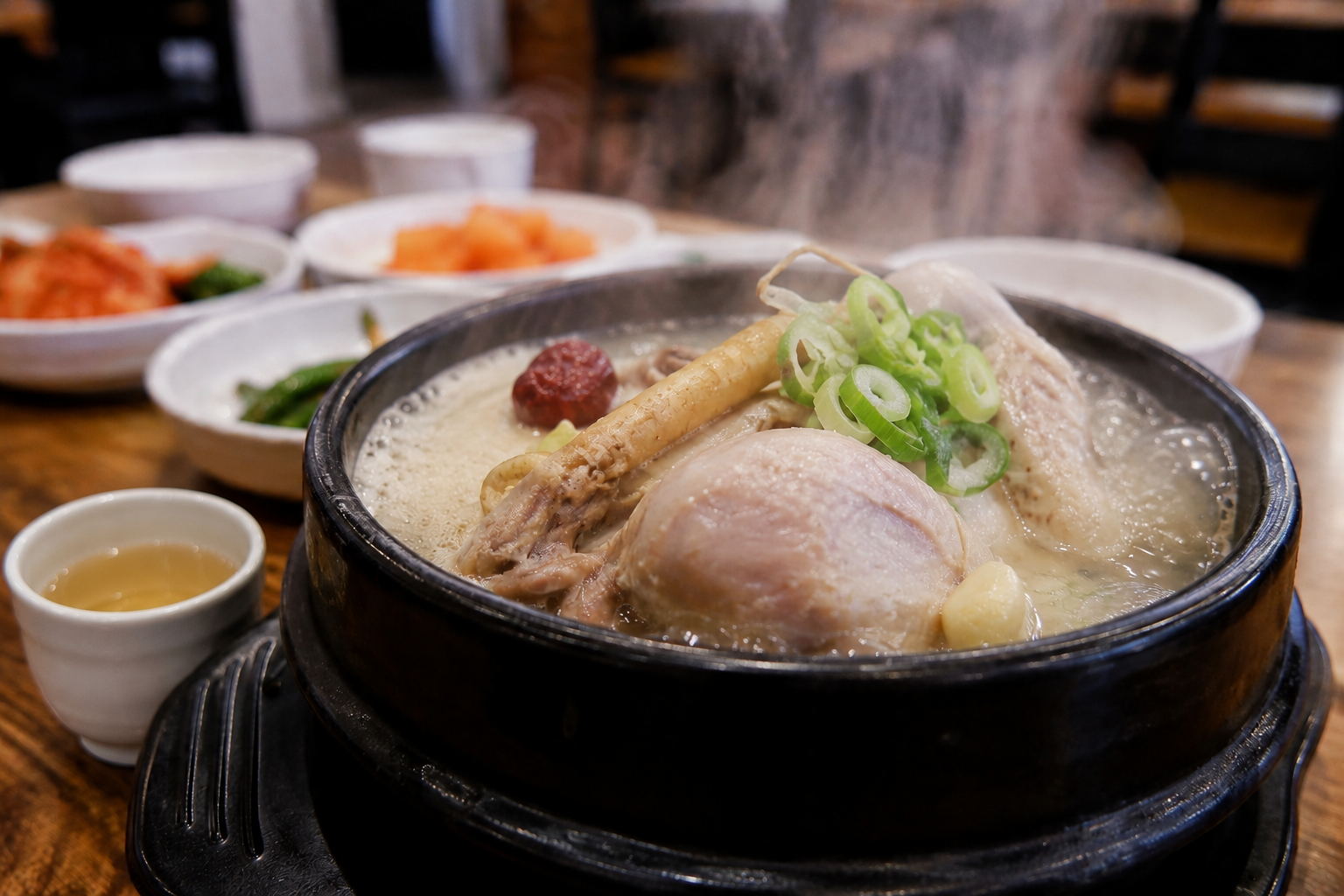
    So what exactly is Samgyetang? It is made by stuffing a whole young chicken with glutinous rice and slowly simmering it with ingredients such as ginseng, garlic, and jujubes. Different restaurants often add their own ingredients and recipes, creating slightly different versions of the dish.

    One thing that surprises many first-time visitors is the small glass of ginseng liquor that is often served before the meal. Just like the complimentary side dishes found in many Korean restaurants, this small drink is usually free. The flavor varies from place to place, but it is often slightly sweet with a noticeable ginseng aroma. After drinking it, you can feel a gentle warmth spreading through your body. It almost feels like a small ritual before the main dish arrives.

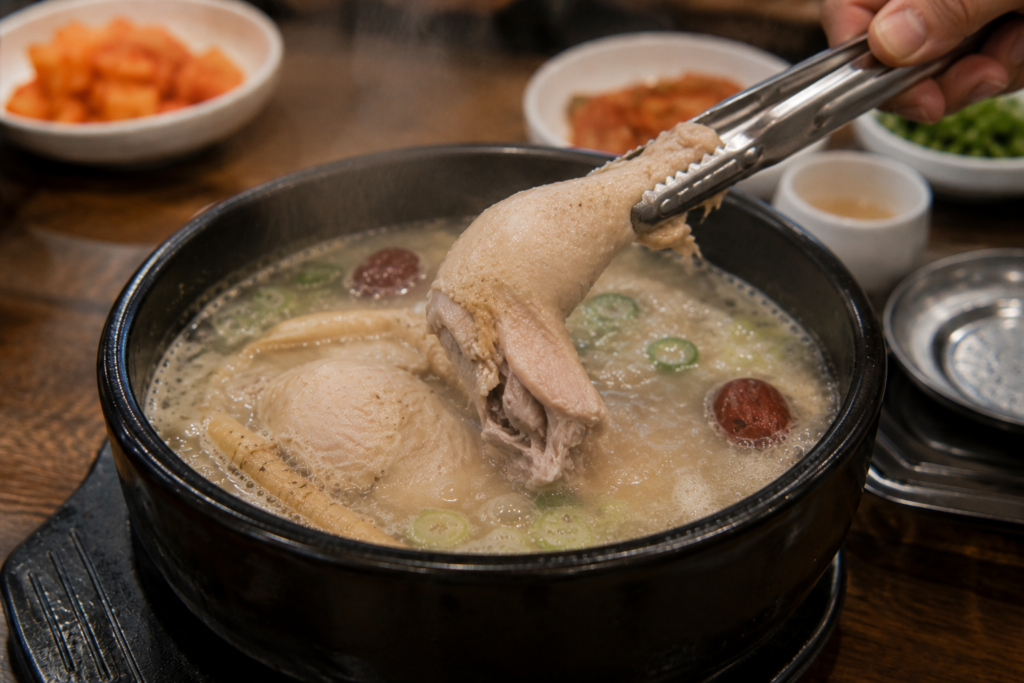
    A few minutes later, the Samgyetang appears. The soup arrives in a heavy stone bowl with steam constantly rising from the surface. Even though it may be one of the hottest days of the year, the bowl in front of you is still boiling.

    If it is your first time seeing it, you might wonder, “People actually eat this in summer?”

    Chicken drumstick lifted from a hot bowl of Korean samgyetang with steaming broth and side dishes.

    The soup is usually seasoned to your own taste with salt. The chicken itself is extremely hot, so most people pull pieces off and let them cool on a small plate before eating. Many Koreans start with a chicken drumstick dipped lightly in salt. The meat is tender, simple, and comforting.

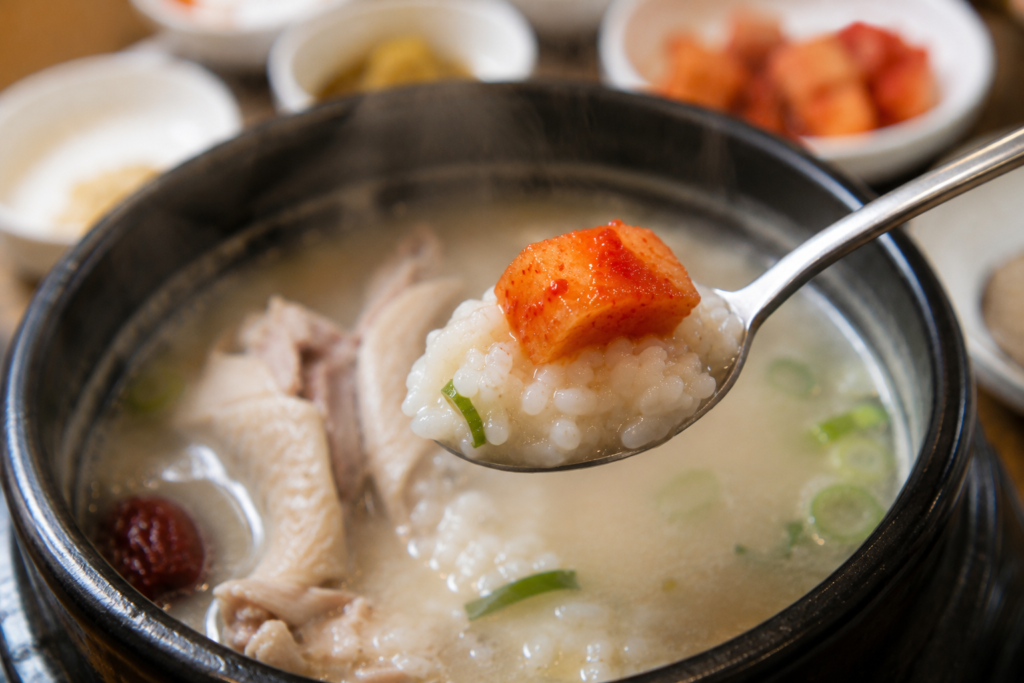
    After eating most of the chicken, the final stage begins. Inside the chicken is the glutinous rice that has been slowly cooking in the broth. Many Koreans mix the rice directly into the soup, creating something that feels almost like a rich rice porridge. A spoonful of Samgyetang followed by a bite of fresh kimchi or kkakdugi is a combination many Koreans know well.

    Before long, the bowl is nearly empty. And after finishing the last spoonful of soup, something interesting happens. Your forehead is covered in sweat. Your body feels warm. And despite the summer heat outside, many people say they feel refreshed, lighter, and surprisingly recharged. That feeling is one reason why Koreans continue to return to Samgyetang every year.

    Spoonful of rice porridge from Korean samgyetang topped with a piece of kkakdugi radish kimchi.

    Of course, things are changing. Many younger Koreans no longer feel that Boknal must be celebrated with a traditional bowl of Samgyetang. Some people simply choose a different kind of chicken.

    There is even a growing joke that Boknal is no longer “Samgyetang Day” but simply “Chicken Day.” As a result, some people eat Samgyetang for lunch and finish the day with chimaek, Korea’s famous combination of fried chicken and beer.

    Even so, Samgyetang remains one of the most recognizable symbols of a Korean summer. To foreigners, eating a boiling hot bowl of chicken soup in the middle of summer may seem strange. To many Koreans, however, Samgyetang is much more than a meal. It is a seasonal tradition that signals the arrival of Korea’s hottest days and a ritual that has helped people get through them for generations.

    If you happen to visit Korea during the summer, I recommend trying a bowl for yourself. You may discover that you feel very different after finishing it than you did before taking the first bite.

    Now I’m curious. What is the go-to food or drink in your country for surviving a brutal summer heatwave?

  • Why Do Koreans Press a Bell Instead of Calling a Waiter?

    Why Do Koreans Press a Bell Instead of Calling a Waiter?

    Imagine sitting at a restaurant and pressing a button whenever you need a waiter. No waving your hand. No trying to make eye contact. No awkwardly saying, “Excuse me.” Just one simple click. In Korea, this is completely normal. One of the small cultural details that surprises many foreign visitors is the call button found…

    Imagine sitting at a restaurant and pressing a button whenever you need a waiter. No waving your hand. No trying to make eye contact. No awkwardly saying, “Excuse me.” Just one simple click.

    In Korea, this is completely normal. One of the small cultural details that surprises many foreign visitors is the call button found on restaurant tables throughout the country.

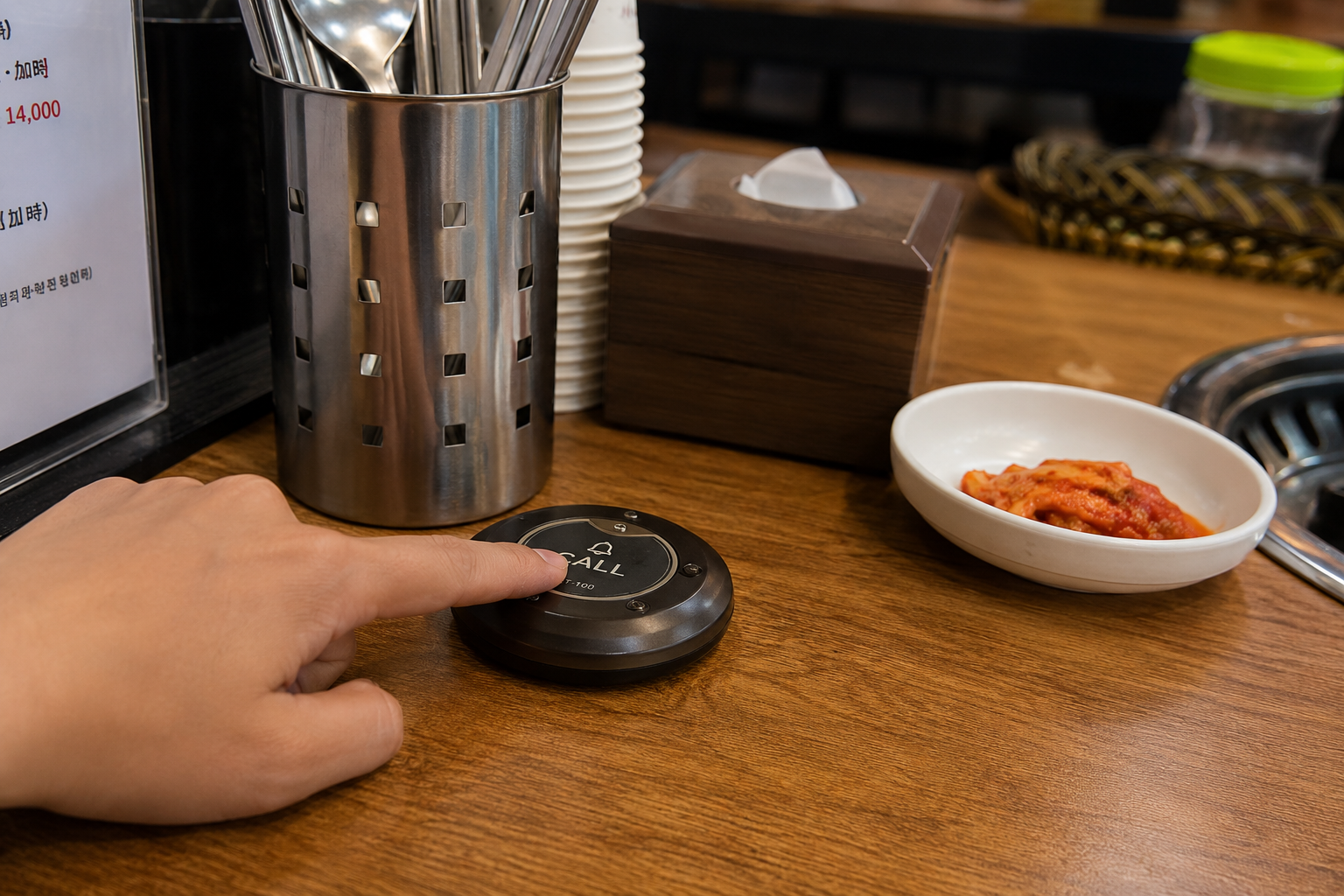
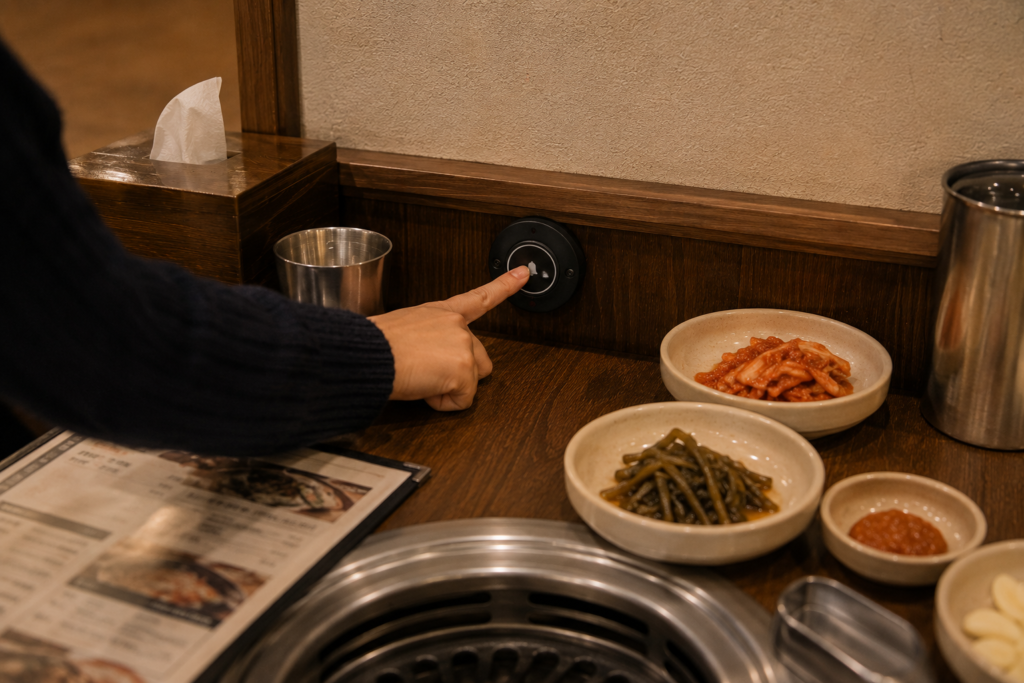
    In many Korean restaurants, a small button is placed directly on the table. Customers use it whenever they want to place an order, request more side dishes, ask for drinks, or get assistance from the staff.

    When you sit down at a restaurant in Korea, there is a good chance that a staff member will tell you: “Please call us when you’re ready to order.”

    For Koreans, this sounds perfectly ordinary. What they actually mean is simple: “When you’re ready, press the button.”

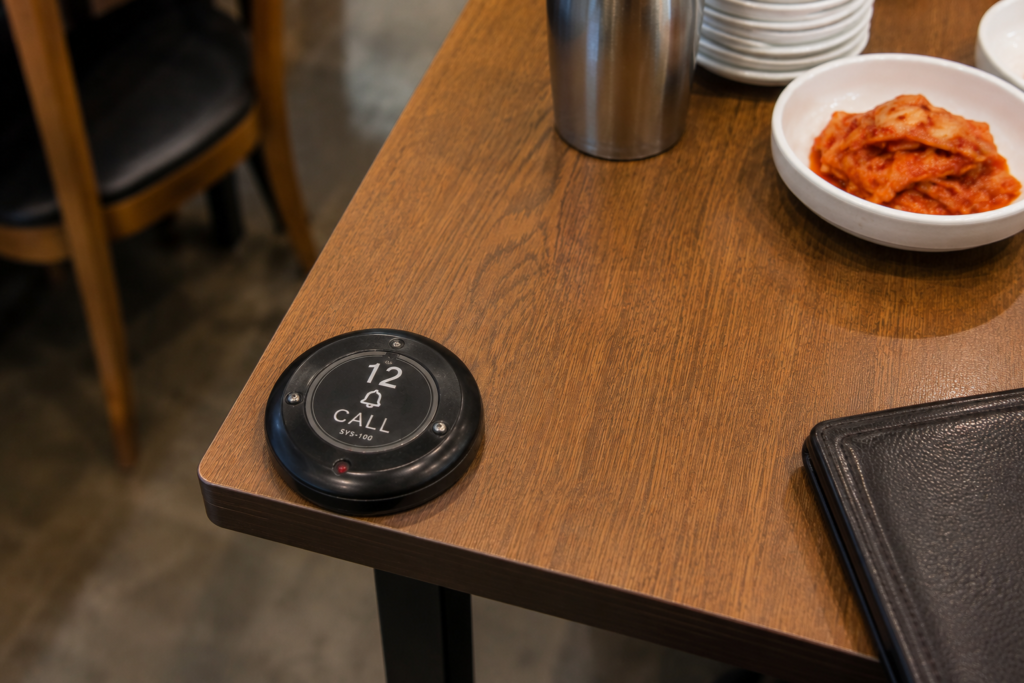
    Once you do, a receiver somewhere inside the restaurant makes a sound. Depending on the restaurant, it may be a ding-dong, a short chime, or another alert sound. At the same time, a display screen shows the number of the table that requested service. The staff checks the number and quickly walks over to help.

    A round call button labeled Table 12 attached to the corner of a table in a Korean restaurant.

    There is also one funny situation that happens quite often. Imagine going to a restaurant with a group of friends. Everyone is still looking at the menu and trying to decide what to order.

    Then suddenly, that one impatient friend presses the call button before anyone has actually made a decision. A few seconds later, the staff member arrives and asks, “Are you ready to order?”

    The problem is that nobody is ready. I have experienced this more than once.

    Instead of awkwardly asking the staff member to come back later, we usually turn the situation into an opportunity. “We are thinking about ordering these dishes. Is there anything you would recommend?”

    Surprisingly, this often helps. Restaurant staff usually know which dishes are most popular, and their suggestions can make the decision easier.

    For many foreigners, however, the real challenge is not pressing the button. It is finding it.

    Sometimes the call button sits in the middle of the table where everyone can easily see it. Other times, it seems to play a small game of hide-and-seek.

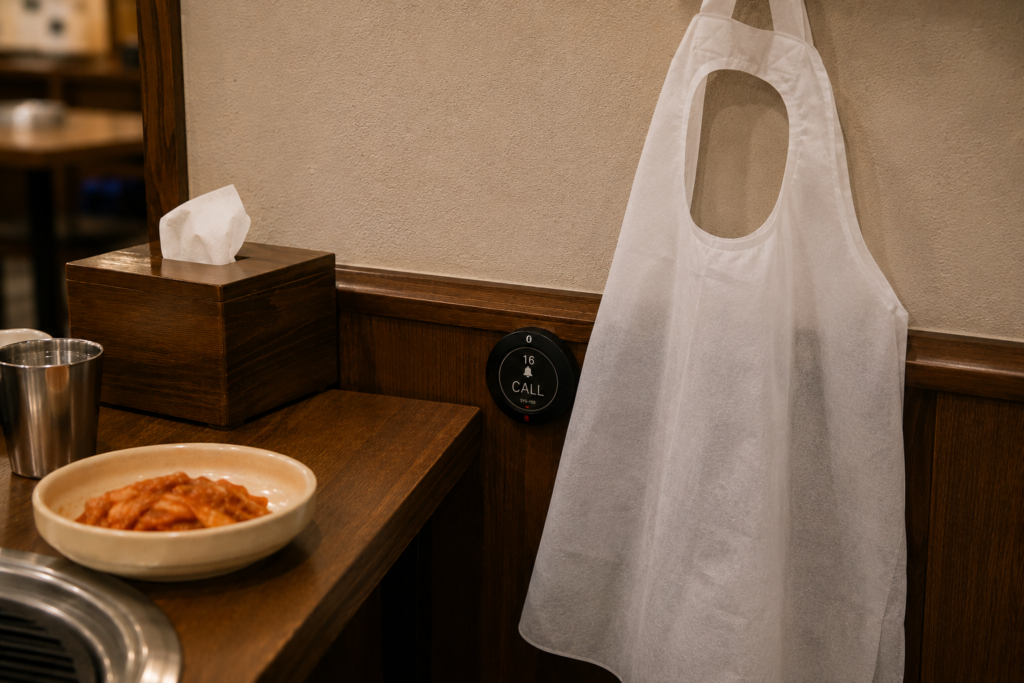
    I have seen call buttons attached to the side of tables, mounted on nearby walls, hidden next to utensil drawers, or attached to tissue boxes and utensil holders.

    For Koreans, this is completely normal. For first-time visitors, it can sometimes take a few minutes to figure out where the button is hiding.

    A restaurant call button partially hidden behind a disposable apron in a Korean BBQ restaurant.

    For most Koreans, this entire system is so common that we rarely think about it. For many foreigners, however, it can feel surprisingly unusual.

    In many countries, customers are expected to wait for a waiter to come by, make eye contact, raise a hand, or politely say, “Excuse me.” The process is often slower and more relaxed.

    Korea tends to work differently. Many Koreans value efficiency and quick service, and the restaurant call button reflects that mindset perfectly.

    I remember experiencing this cultural difference myself while staying in Europe. When I first visited restaurants there, I sometimes found myself wondering why service seemed so slow. The staff did not come over immediately, and I often had to wait until they noticed me.

    At first, it felt frustrating. Later, I realized it was not a matter of good or bad service. It was simply a different culture.

    In many European countries, restaurants are designed to encourage customers to enjoy their meals at a slower pace. People spend time talking, relaxing, and enjoying the atmosphere.

    In Korea, customers generally expect faster service whenever they need something. The restaurant call button is one small example of how that cultural preference has shaped everyday life.

    Of course, pressing the button does not guarantee that someone will appear instantly. Restaurants can get extremely busy, especially during lunch and dinner rush hours. Sometimes I press the button and notice that another table’s number appears immediately afterward. Occasionally, staff members are simply too busy to respond right away.

    When that happens, most Koreans do not panic. They usually wait a little while and then press the button again. Honestly, I do the same thing. If nobody comes after a reasonable amount of time, I might press it two or three times.

    And if the restaurant is especially busy, many people simply stop waiting and solve the problem themselves. Some people get their own water. Others grab extra napkins, utensils, or plates without asking for assistance.

    Part of this comes from Korea’s famous “ppalli-ppalli” culture, which roughly translates to “hurry, hurry.” Koreans are so used to getting things done quickly that waiting without doing anything can sometimes feel strange.

    I noticed this even more when I traveled abroad. At some restaurants, I found myself wondering why nobody had come to take my order yet. Looking back, I realized the service was not slow at all. I was simply used to a different system.

    The call button fits naturally into that mindset. It allows customers to ask for help exactly when they need it, while helping restaurants serve many tables efficiently at the same time. At the same time, many Koreans understand when staff members are overwhelmed, which is why it is common to see people helping themselves whenever possible.

    A customer pressing a call button to request service at a Korean restaurant table.

    Personally, I think the greatest benefit of the call button is that it helps shy people. Before call buttons became common, customers often had to raise their voices to get a staff member’s attention. In crowded and noisy restaurants, that could feel uncomfortable, especially for introverted people.

    Now, all it takes is a single press of a button. The staff can easily see which table needs help, and customers can ask for what they need without feeling awkward. It is a simple system, but it works remarkably well.

    So if you ever visit Korea and notice a small button sitting somewhere around your table, don’t be afraid to use it. You may have to find it first. But once you do, you will be using a system that millions of Koreans rely on every day.

    For locals, it is one of the most ordinary things in the world. For many visitors, however, it might become one of the most memorable parts of the Korean dining experience. And who knows? That little button may end up helping you choose your dinner, too.

    Now I’m curious. How do you usually get a waiter’s attention in your country?

  • Why Is Coffee Mix Everywhere in Korea?

    Why Is Coffee Mix Everywhere in Korea?

    Why do Koreans stir coffee with the wrapper and carry coffee mix everywhere? Explore the unique culture behind Korea’s favorite everyday coffee.

    One of the most unexpected things you’ll see in Korea isn’t K-pop, Korean BBQ, or even convenience stores open all night.

    It’s a tiny stick-shaped packet of coffee.

    More specifically, it’s Korea’s love affair with coffee mix.

    To many people outside Korea, instant coffee feels like something from the past—a quick and inexpensive drink that has largely been replaced by cafés and specialty coffee.

    But in Korea, coffee mix is still very much alive.

    In fact, it might be easier to find places that don’t have coffee mix than places that do.

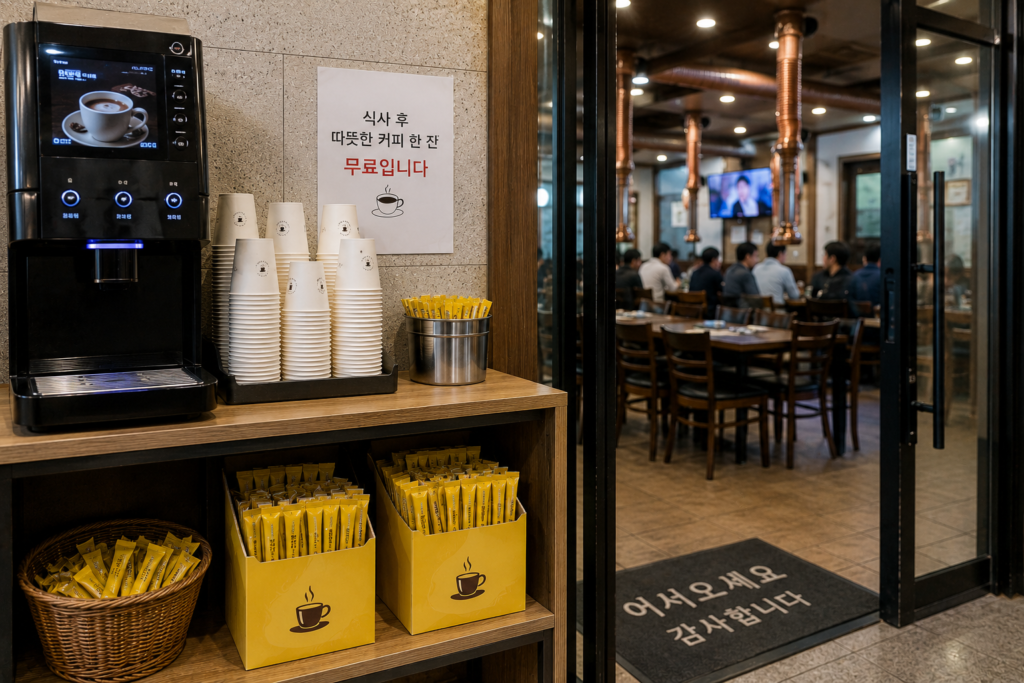
    Free coffee mix station commonly found at Korean restaurants, featuring paper cups and instant coffee sticks.

    Finish a meal at a local restaurant, and you’ll often find a self-service coffee machine near the exit.

    Walk into an office pantry, and there is a good chance you’ll see a box of coffee mix sitting next to the hot water dispenser.

    Factory break rooms have it.

    Hospitals have it.

    Small repair shops have it.

    Vehicle maintenance centers have it.

    For Koreans, coffee mix isn’t simply a beverage. It’s part of everyday life.

    Many people start their day with a cup after arriving at work.

    Others drink one after lunch.

    Some reach for it during an afternoon slump.

    And for many workers, another cup appears right before overtime begins.

    Some Koreans even joke that starting the day without coffee mix is like driving on a highway without fuel.

    Of course, Korea is also famous for its café culture.

    Iced Americanos are everywhere, and younger generations often joke that they survive on nothing but “Ame”—short for Americano.

    New coffee shops continue to open across the country, and specialty coffee has become more popular than ever.

    Yet somehow, coffee mix has never disappeared.

    People who love coffee mix will tell you that it offers a completely different experience.

    The combination of coffee, sugar, and creamer creates a sweet, familiar flavor that many Koreans have known since childhood.

    For some people, the smell alone brings back memories of office break rooms, family gatherings, school staff rooms, or long days at work.

    But perhaps the most interesting part of Korea’s coffee mix culture isn’t the coffee itself.

    It’s the small habits that come with it.

    For example, imagine making a cup of coffee when there isn’t a spoon nearby.

    Many Koreans won’t bother looking for one.

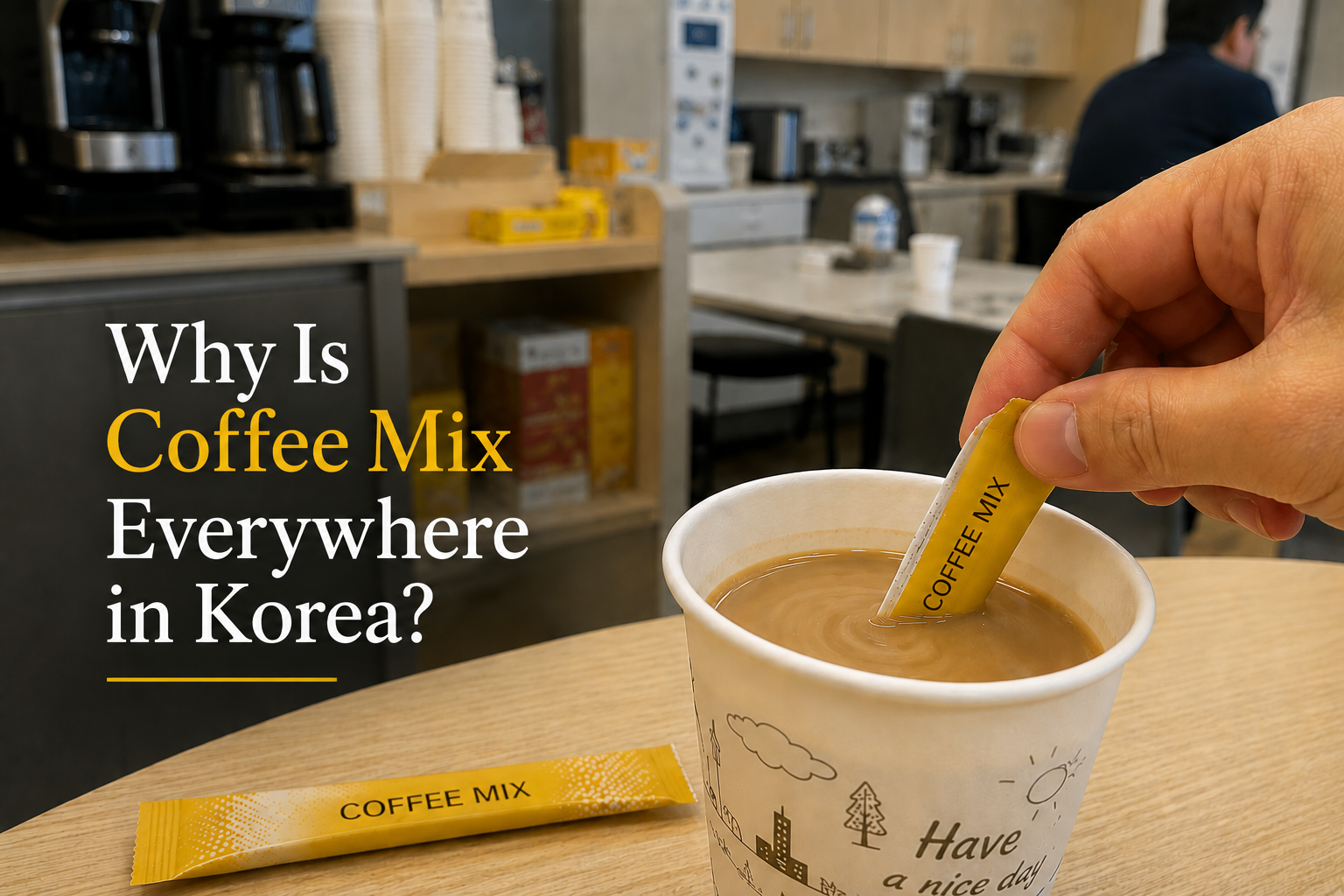
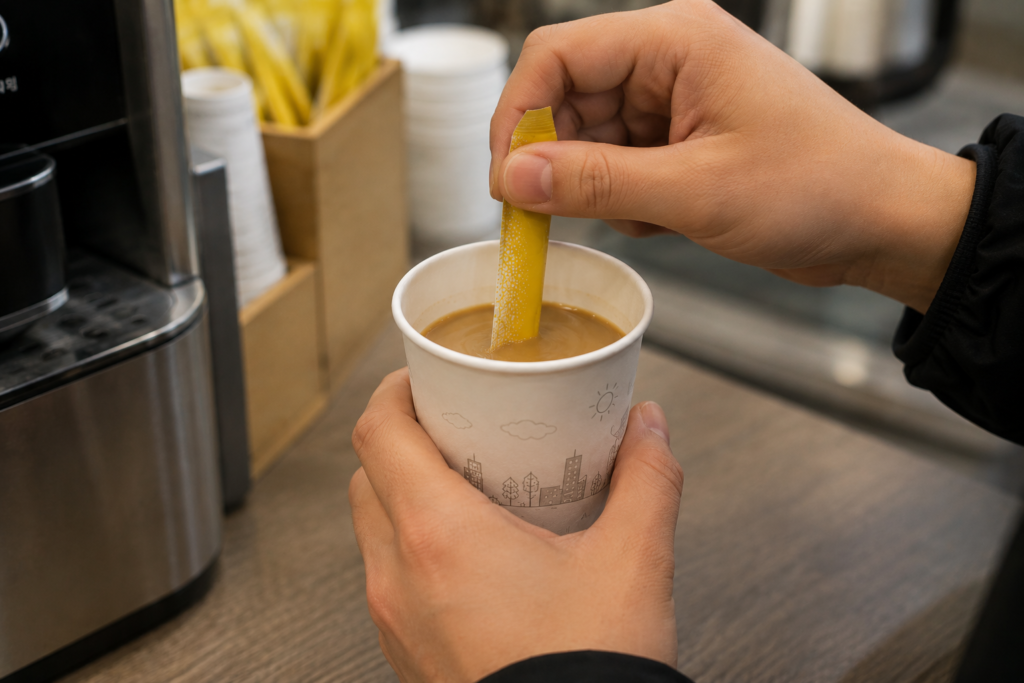
    Instead, they’ll simply fold the empty coffee mix packet in half and use it to stir the coffee.

    To Koreans, this is completely normal.

    To foreigners seeing it for the first time, it can be surprisingly funny.

    “Wait… are they stirring coffee with the wrapper?”

    Yes. Yes, they are.

    A Korean worker stirring coffee mix with a folded coffee stick packet in a paper cup during a break.

    Another detail that often surprises visitors can be found on the coffee mix packet itself.

    Some Korean coffee mix brands include a small sugar control section near the top of the stick.

    By pinching a specific part of the packet before pouring, you can reduce the amount of sugar that goes into your cup.

    It’s a simple idea, but many first-time visitors are surprised that such a feature even exists.

    Over the years, coffee mix drinkers have also developed their own personal rules for making the perfect cup.

    One of the most common pieces of advice is simple:

    Don’t use too much water.

    Many coffee mix fans believe that using less water creates a richer flavor and brings out the sweetness more effectively.

    Another surprisingly common belief is that coffee mix tastes better after it cools down slightly.

    Some Koreans will intentionally wait a few minutes before taking their first sip.

    They claim the sweetness becomes more noticeable and the flavor feels smoother once the coffee is no longer piping hot.

    There is even a popular way to enjoy coffee mix cold.

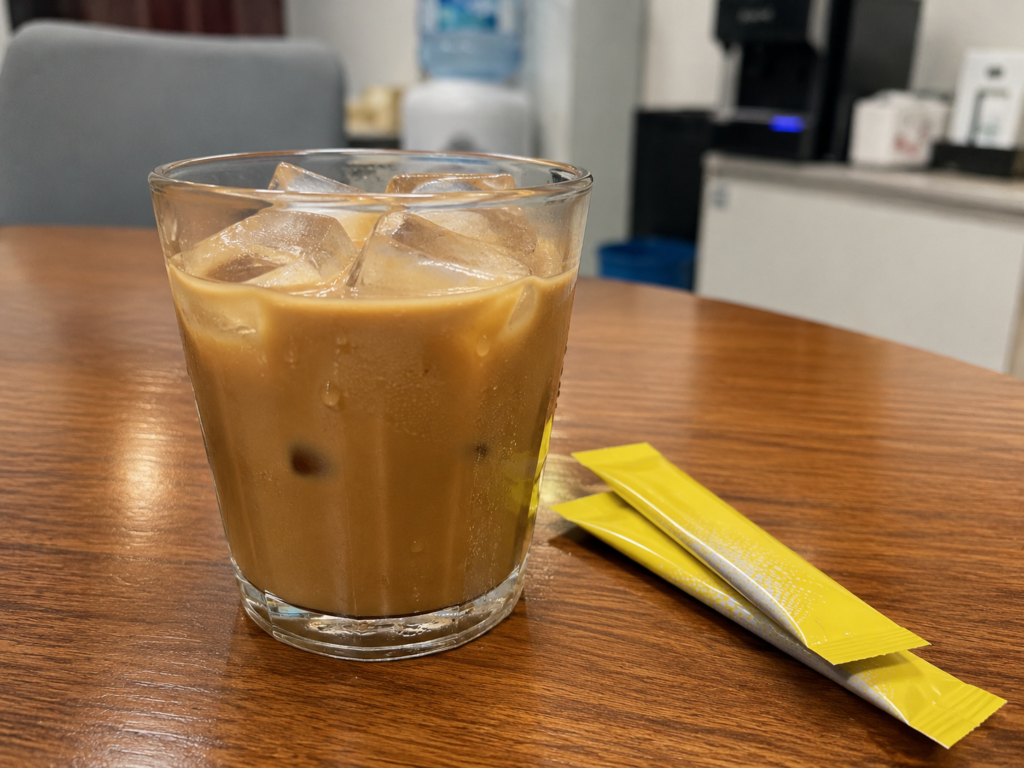
    Instead of pouring cold water directly into the powder, people first dissolve the mix using a small amount of hot water.

    After that, they add cold water or ice to create an iced version.

    For someone trying coffee mix for the first time, these little tricks can feel like hidden local knowledge passed from one person to another.

    A glass of Korean-style iced coffee mix served with ice cubes and coffee mix sticks on a table.

    Perhaps that is why coffee mix has remained so popular for so long.

    It’s not just about caffeine.

    It’s about taking a short break after lunch.

    It’s about chatting with coworkers for a few minutes before getting back to work.

    It’s about having a small moment of comfort during a busy day.

    In a country filled with trendy cafés and endless coffee options, that tiny stick-shaped packet continues to hold a special place in everyday life.

    To many Koreans, coffee mix is much more than coffee.

    It’s a habit, a comfort, and a small part of the rhythm of daily life.

    Now I’m curious.

    Is there a simple everyday drink in your country that seems to be everywhere?

  • The Korean BBQ Ritual That Surprises Foreigners: The Art of Ssam

    The Korean BBQ Ritual That Surprises Foreigners: The Art of Ssam

    Discover the unique Korean culture of Ssam, the famous Korean BBQ ritual that surprises many first-time visitors to Korea.

    There is a fascinating ritual that happens at every Korean BBQ table.
    If you visit a Samgyeopsal (pork belly) restaurant in Korea for the first time, you will witness a scene that looks like a delicious, high-stakes game of Jenga.
    It’s the art of “Ssam” (쌈)—the unique Korean culture of wrapping food in leafy vegetables.
    To Koreans, this is second nature. But to travelers, watching locals construct and consume a wrap is nothing short of a theatrical performance. They don’t just eat the meat; they build an entire flavor universe inside a single leaf.

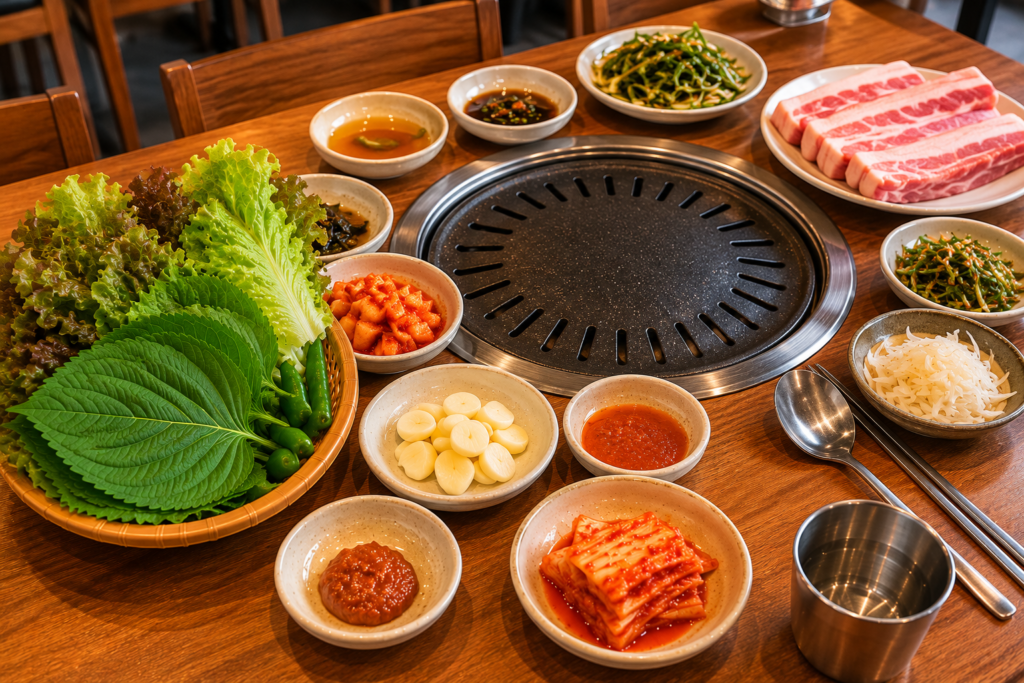
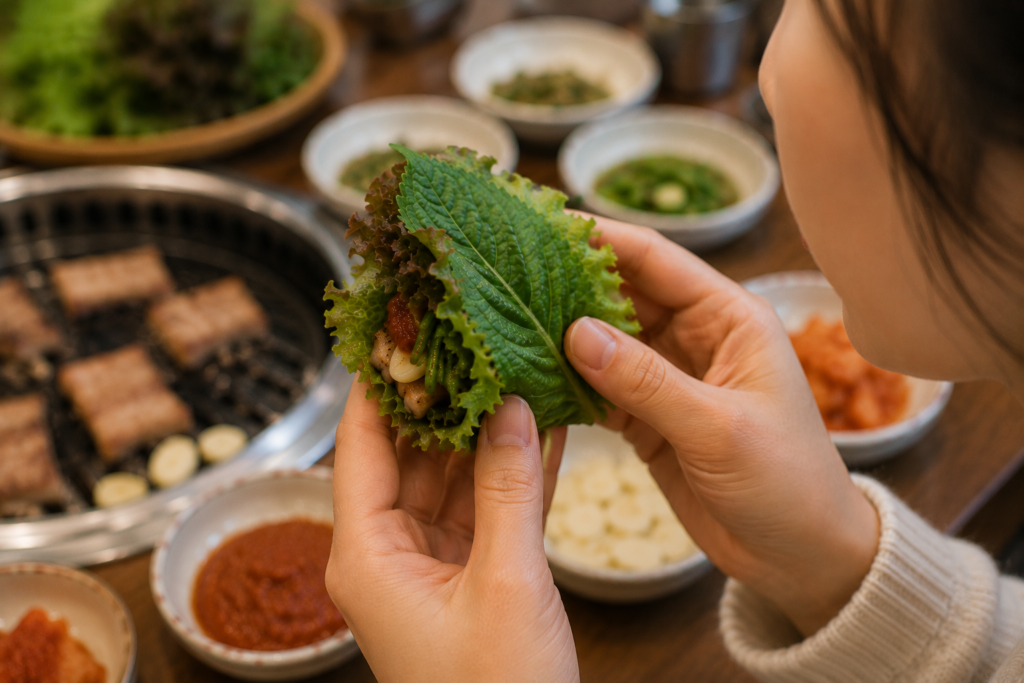
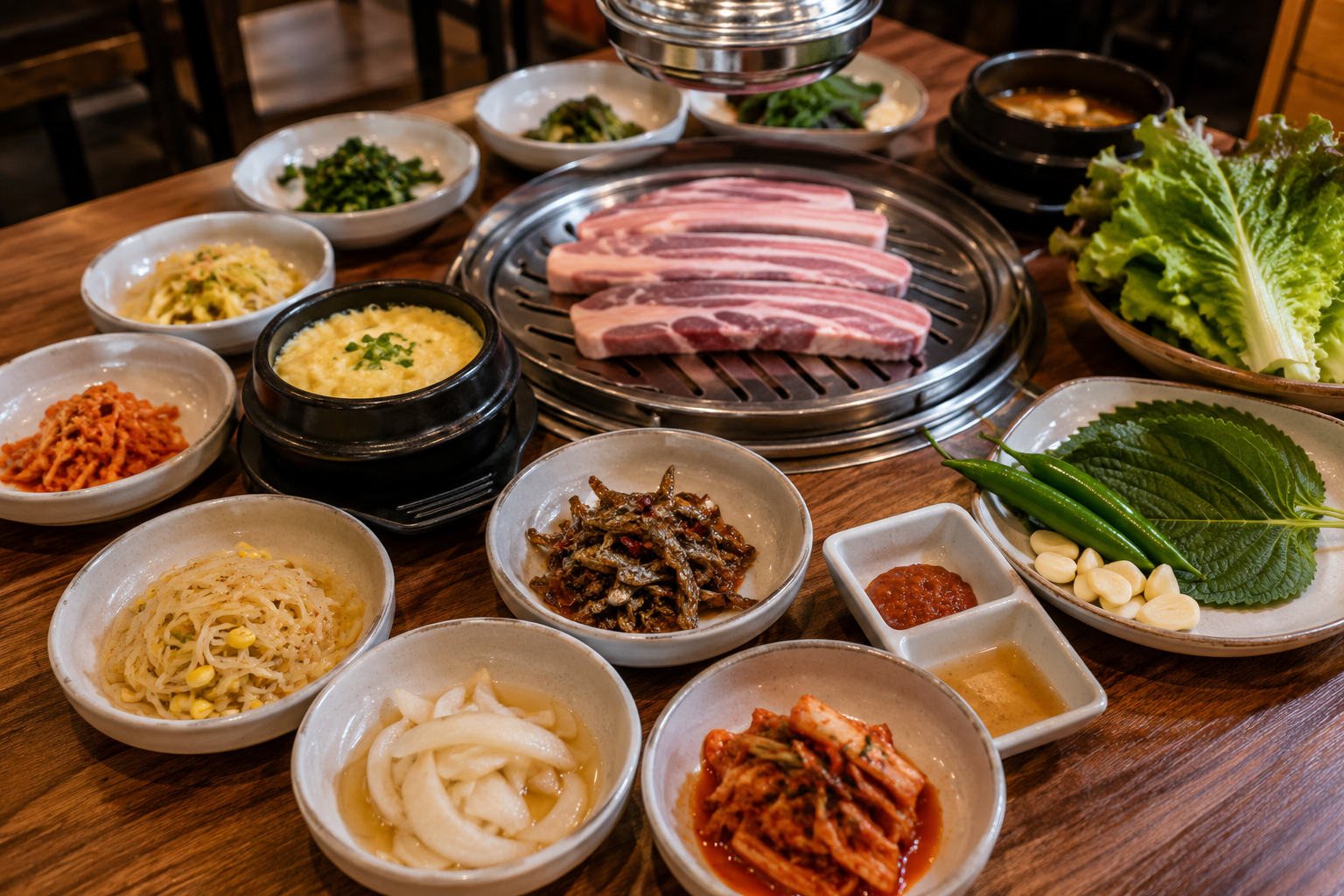
    A Korean BBQ table set with fresh lettuce, perilla leaves, pork belly, garlic, kimchi, and traditional side dishes for making ssam.

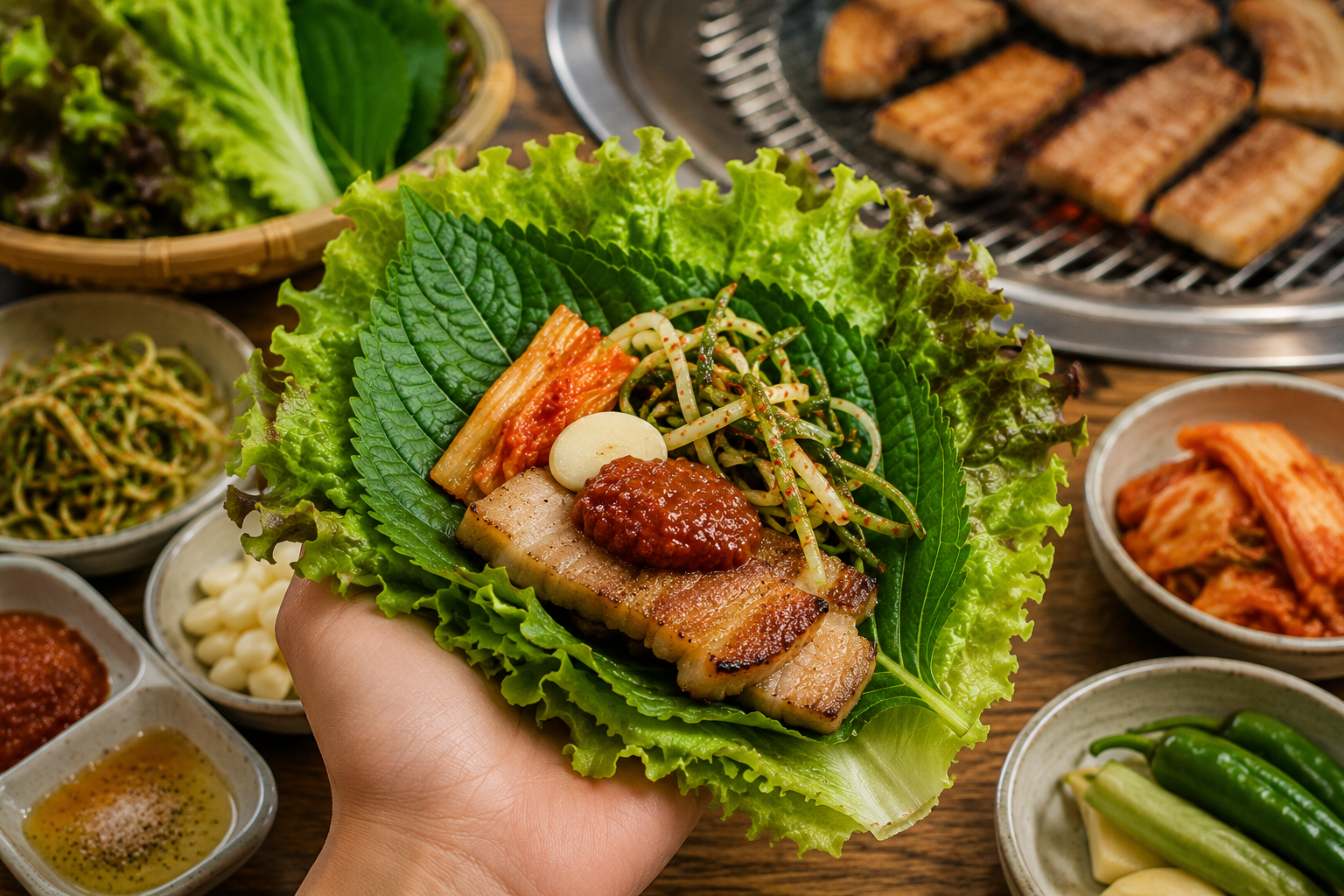
    Imagine this: a Korean diner picks up a piece of lettuce or a perilla leaf. Then, the layering begins. First goes a thick piece of grilled pork belly. Next, a dollop of Ssamjang (savory, fermented bean sauce). Then comes a slice of raw or grilled garlic, followed by a strip of spicy scallion salad, and maybe a piece of grilled Kimchi. Some people even add a small spoonful of hot rice. By the time the masterpiece is finished, the wrap is easily the size of a small fist. And this is the exact moment where first-time visitors gasp.

    “Are they really going to eat that in one bite?” “There’s no way that fits.”

    Large Korean ssam wrap with grilled pork belly, perilla leaf, garlic, and ssamjang at a Korean BBQ restaurant.

    But before they can finish the thought, the Korean diner opens their mouth incredibly wide and pops the entire, giant wrap inside in one clean motion. No biting it in half, no dropping a single ingredient. To an outsider, it looks impossible, almost aggressive. But to Koreans, eating a Ssam in one bite is the ultimate satisfaction. The magic lies in the explosion of flavors. The moment you chew, the richness of the pork, the salty punch of the Ssamjang, the sharp kick of garlic, and the fresh crunch of the lettuce all combine in your mouth at once. If you bite it in half, the juices leak out, the structure collapses, and the magic is lost.

    This culture is so deeply rooted that most Koreans feel a strange sense of emptiness if they eat grilled meat without wrapping it. Some people believe that the tradition may be connected to “Bokssam” (wrapping luck), a custom in which people wrapped rice in seaweed or leafy greens during the Lunar New Year to wish for good fortune. Later, during times when meat was scarce, wrapping a small piece of pork with plenty of vegetables was a practical way to feed a whole family while making meals feel more satisfying and balanced.

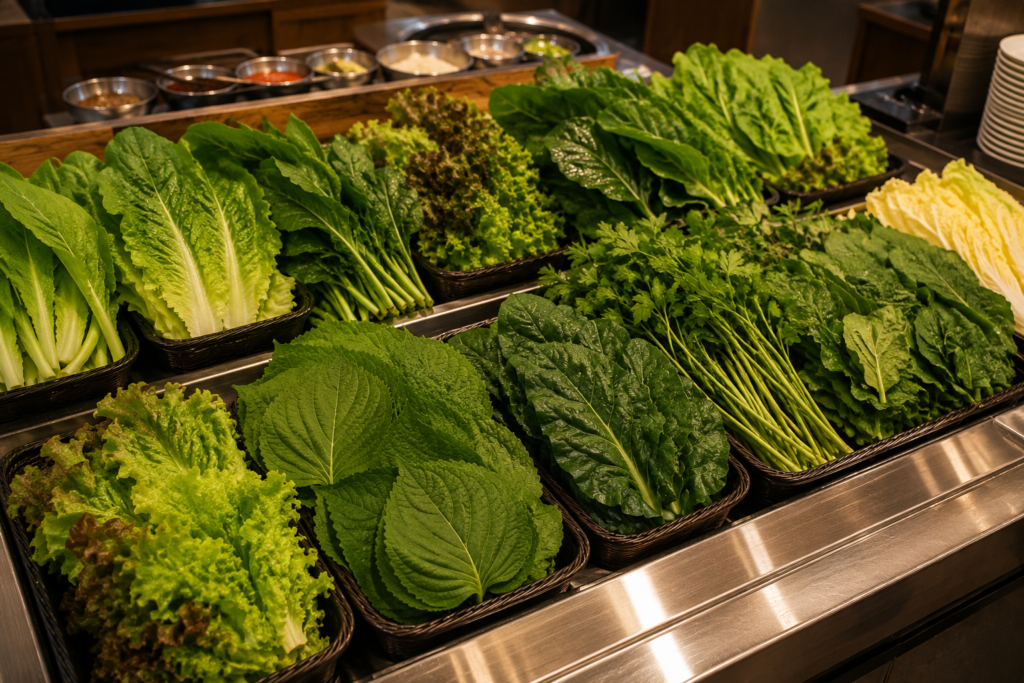
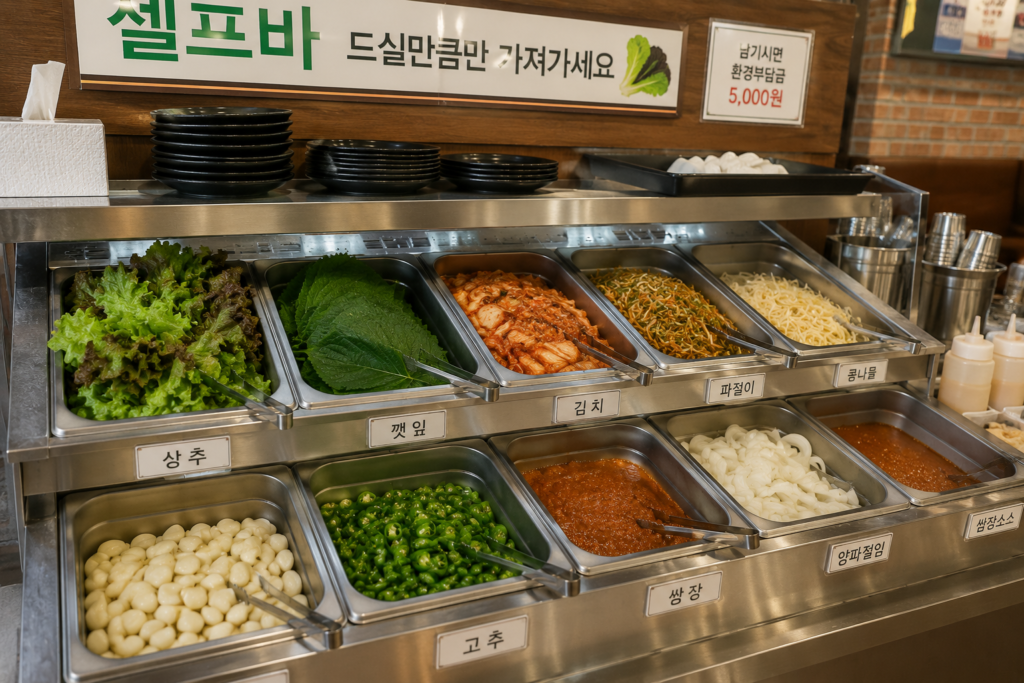
    A Korean BBQ restaurant salad bar offering a variety of fresh ssam vegetables and leafy greens.

    Today, the obsession with Ssam has created a fun divide among locals: The Lettuce Team versus The Perilla Leaf Team. Those who prefer lettuce love it for its clean, refreshing crunch that lets the flavor of the meat shine. On the other hand, the Perilla Leaf (Kkaen-nip) loyalists argue that its unique, herbal, and slightly minty aroma is what elevates Korean BBQ to the next level. Some hardcore foodies won’t even touch a piece of pork belly if perilla leaves aren’t on the table. And it doesn’t stop at just these two. If you venture deeper into Korean dining, you’ll encounter greens like Dangwi (Korean angelica), which has a strong, medicinal herbal scent that can be surprising at first but is something many Koreans grow to enjoy over time, as well as kale, chicory, and romaine.

    The best part about Ssam culture? There is absolutely no right or wrong answer. Whether you stack three leaves together, double up on garlic, or skip the rice entirely, it’s a culinary sandbox where you are the chef of your own bite. The culture is still evolving today—with people wrapping raw fish (Hoe), using pickled radish slices (Ssam-mu), or even experimenting with fusion styles like using tortillas.

    So, when you find yourself at a Korean BBQ restaurant, don’t be shy. Grab a leaf, pile it high with whatever catches your eye, open your mouth as wide as you can, and dive into the beautiful, chaotic, and delicious world of Ssam.

    Now I’m curious. Have you ever tried making a Korean Ssam? What is your ultimate combination of ingredients? 🍖🥬

  • “Wait, I Didn’t Order This!” — Why Korean Side Dishes Are Free

    “Wait, I Didn’t Order This!” — Why Korean Side Dishes Are Free

    There is a unique culture in South Korea that locals take completely for granted, but leaves travelers absolutely mind-blown.It’s the magic of free side dishes, known as Banchan (반찬).Imagine this: You walk into a Korean BBQ restaurant and order two servings of Samgyeopsal (pork belly).You sit down, wait for your food, and suddenly your table…

    There is a unique culture in South Korea that locals take completely for granted, but leaves travelers absolutely mind-blown.
    It’s the magic of free side dishes, known as Banchan (반찬).
    Imagine this: You walk into a Korean BBQ restaurant and order two servings of Samgyeopsal (pork belly).
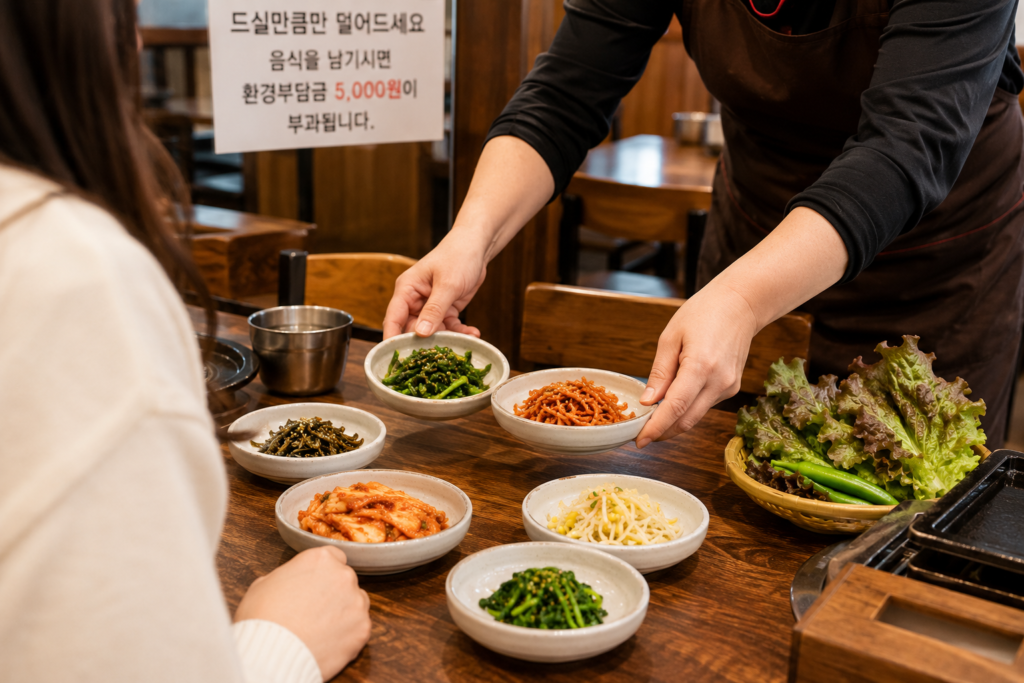
    You sit down, wait for your food, and suddenly your table starts filling up with small plates of food.

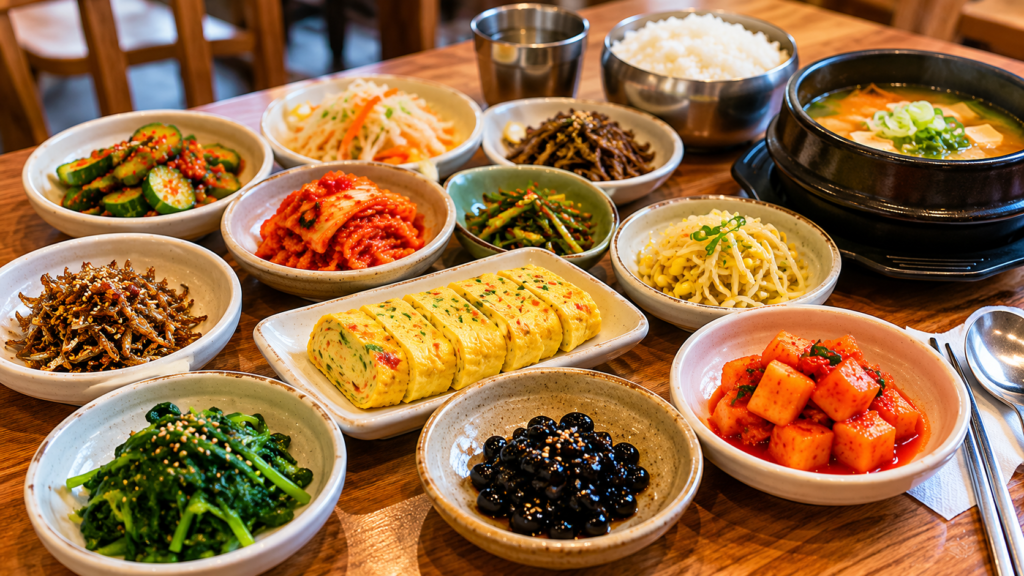
    We’re talking Kimchi, seasoned bean sprouts, scallion salad, fresh garlic, Ssamjang (savory dipping sauce), pickled onions, perilla leaves, stir-fried anchovies, spicy dried squid, and even a fluffy, steaming pot of steamed egg (Gyeran-jjim).
    The surprising part? Your main dish—the pork belly—hasn’t even hit the grill yet, but your table is already full of food. For Koreans, this is completely normal.
    But for foreigners visiting Korea for the first time, the reaction is often the same:

    A server placing complimentary Korean side dishes on a restaurant table.

    “Wait, did we order this?”

    “Nope.”

    “So, is it complimentary?”

    “Yeah.”

    “Wait… so we don’t have to pay for any of this?”

    “Not a single penny.”

    If you’ve ever shared a meal with foreign friends in Korea, you’ve probably had this exact conversation at least once.
    Koreans grow up with this. Whether you go out to eat with your family or grab a meal with friends, Banchan simply appears on the table. Because it’s such a normal part of everyday dining, most locals don’t even realize how unusual it can seem to visitors.
    In many countries, restaurants typically serve only the items listed on the menu. That’s why Korea’s side-dish culture often feels surprisingly generous to first-time visitors.

    What surprises visitors even more is that the experience doesn’t stop there.
    Once you finish your side dishes, most traditional Korean restaurants will happily refill them for free.
    Let’s say you finished the Kimchi, stir-fried anchovies, or rolled omelet. All you have to do is ask:
    “Banchan jogeum-man deo juseyo.”
    (Can we get a little more side dishes, please?)
    A moment later, the server brings another serving at no extra charge.
    For Koreans, it’s completely ordinary. For many travelers, it’s a second culture shock.

    Lately, though, the way restaurants operate has started to change a little.
    While asking staff directly used to be the most common method, self-service bars are now easy to find, especially at Korean BBQ restaurants.
    These stations are often stocked with lettuce, perilla leaves, Kimchi, bean sprouts, pickled onions, garlic, chili peppers, and various sauces.
    Customers simply take what they need and return to their table.

    A self-service side dish bar commonly found in Korean BBQ restaurants.

    One thing many visitors notice at Korean BBQ restaurants is how freely people use the self-service bar.
    It is common to see customers returning several times for more lettuce, Kimchi, garlic, or sauces throughout the meal.
    In Korea, nobody thinks twice about it.
    The goal is not simply to eat meat, but to create different combinations and flavors with every bite.
    That is one reason Korean meals often feel more interactive than many visitors expect.

    Growing up in Korea, I rarely thought about Banchan at all. It was simply part of every meal.
    Whether eating with family, meeting friends after work, or visiting a small local restaurant, side dishes were always there.
    It wasn’t until I started dining with foreign friends that I realized how unusual this culture can seem from the outside.
    Some of them were hesitant to touch the side dishes at first because they assumed they would be charged separately later.
    Others thought the restaurant accidentally brought food meant for another table.
    For Koreans, those reactions can be surprisingly funny because Banchan feels as normal as receiving a glass of water.

    In fact, to many Koreans, the idea of eating only one dish can actually feel a little strange.
    If you order Samgyeopsal, you naturally expect Kimchi, garlic, Ssamjang, and vegetables to be on the table as well.
    If those side dishes never arrived, many Koreans would probably feel that something was missing.
    Instead of eating a single dish by itself, meals are often enjoyed with different flavors, textures, and side dishes shared around the table. It helps turn a simple meal into something much more enjoyable.

    Of course, rising food prices and labor costs have brought some changes as well.
    Some restaurants now charge a small table-setting fee, while others may limit refills on certain side dishes.
    Even so, free Banchan remains a common part of dining culture across Korea.

    Free side dish refills are a common part of Korean dining culture.

    Many visitors remember Korean BBQ, Kimchi, or fried chicken long after their trip is over.

    But sometimes, the thing they remember most is much smaller.

    It’s the moment when a table suddenly fills with food they never ordered, and everyone around them acts as if nothing unusual happened.

  • “Rainy Day, Drinks?” — Why Koreans Crave Samgyeopsal and Pajeon When It Rains

    “Rainy Day, Drinks?” — Why Koreans Crave Samgyeopsal and Pajeon When It Rains

    It’s a gloomy afternoon in Seoul, and the rain is starting to pour. You’d think people would want to rush home, wrap themselves in blankets, and watch Netflix, right? But then, my phone vibrates. It’s a text from a friend. It simply says: “비 오는데 한잔?” (Bi-oh-neun-de han-jan? / It’s raining… want to grab a…

    It’s a gloomy afternoon in Seoul, and the rain is starting to pour. You’d think people would want to rush home, wrap themselves in blankets, and watch Netflix, right?

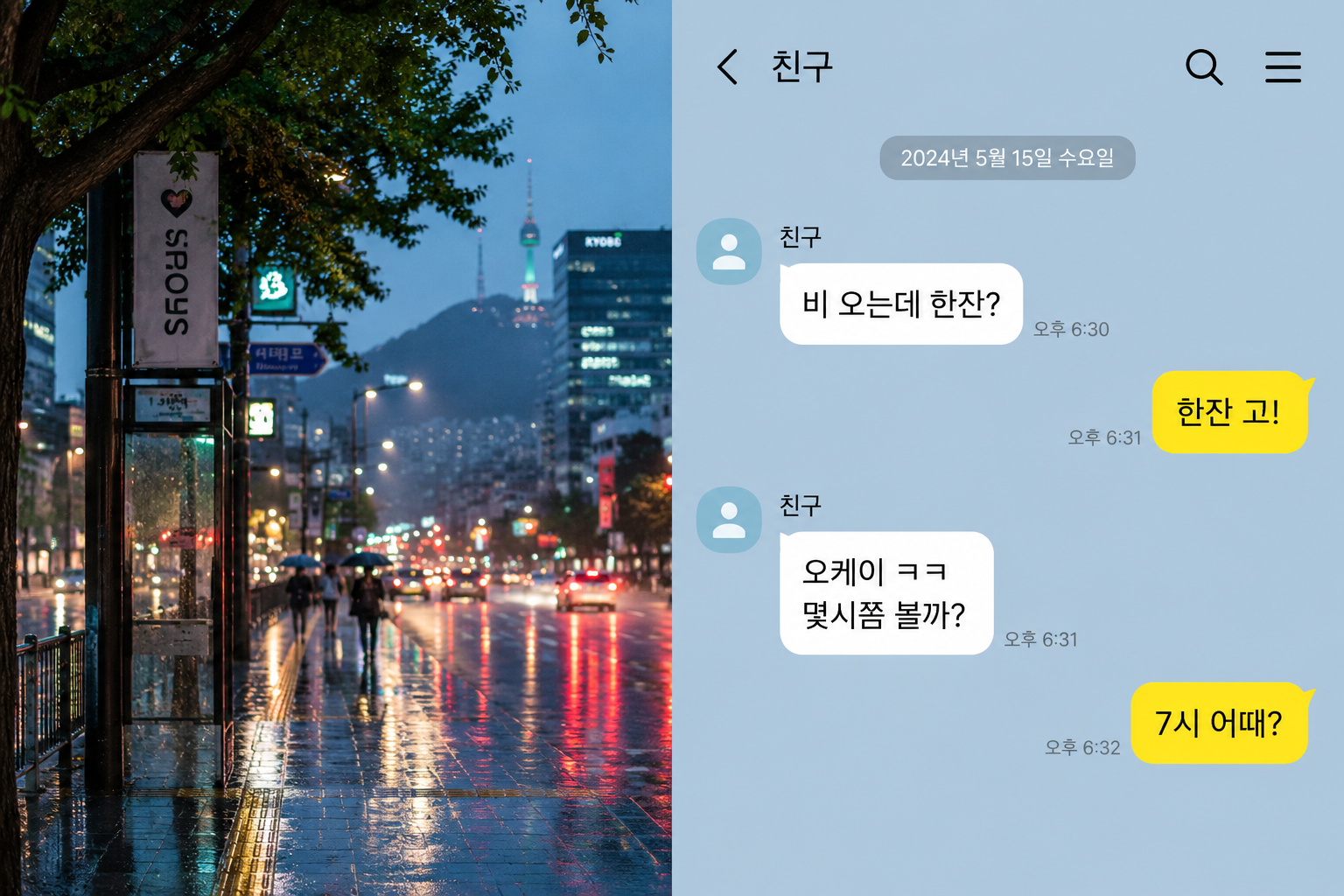
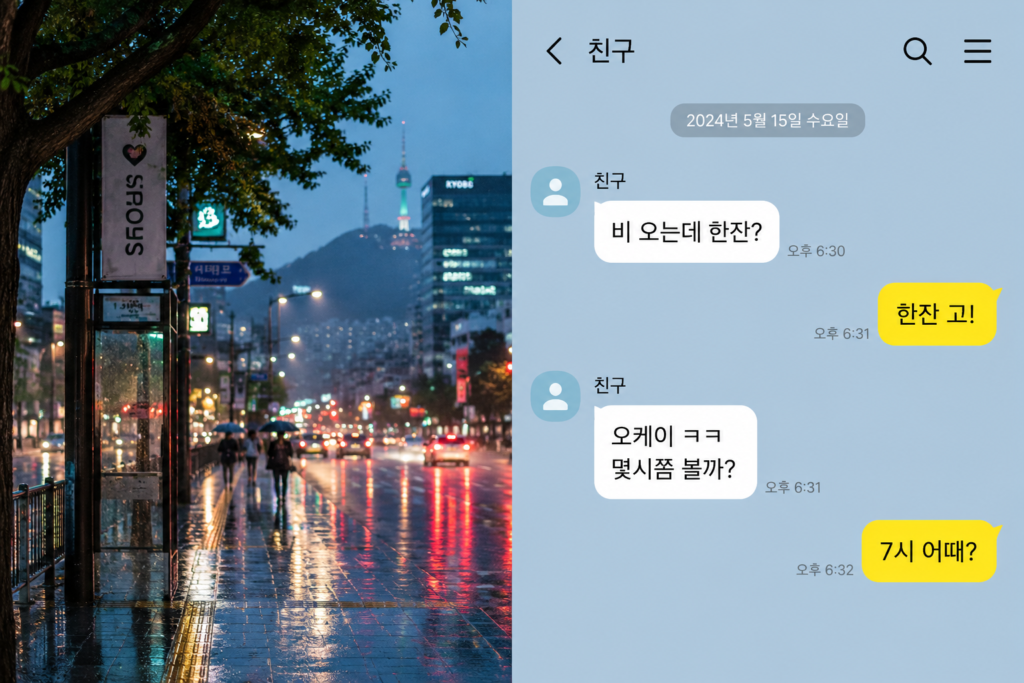
    But then, my phone vibrates. It’s a text from a friend. It simply says: “비 오는데 한잔?” (Bi-oh-neun-de han-jan? / It’s raining… want to grab a drink?)

    Without a second thought, I text back: “한잔 고!” (Han-jan GO! / I’m in. Let’s do it!)

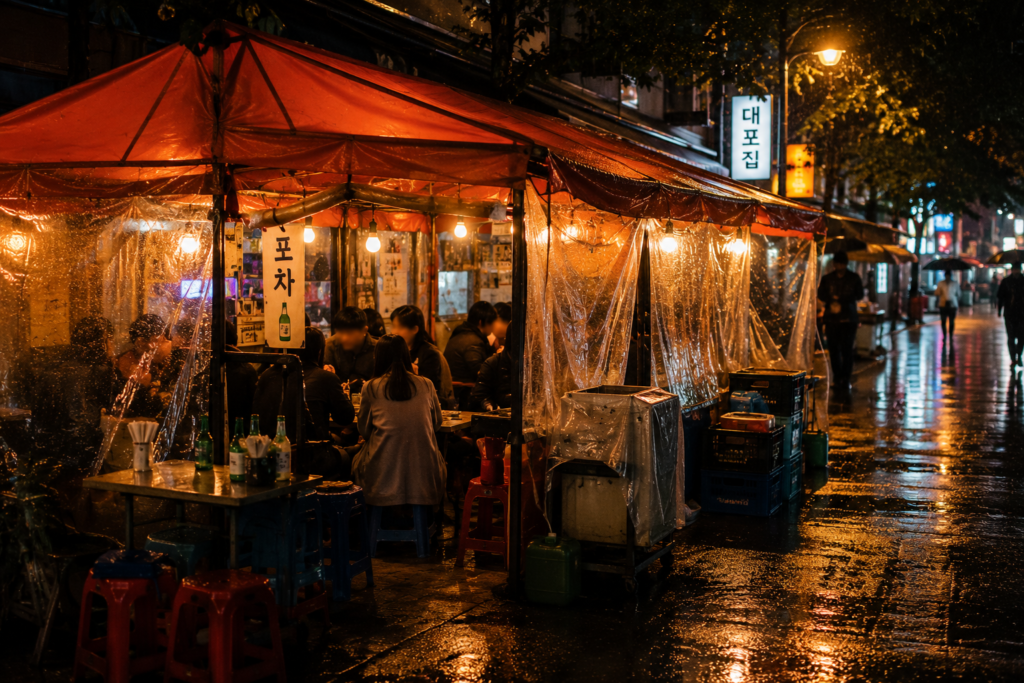
    And just like that, plans are made. On rainy days, this kind of message is extremely common in Korea. It might sound simple, but for Koreans, rainy days and drinking with friends somehow just go together.

    For many of us, this unique Korean rainy day culture makes certain foods impossible to resist. The two biggest classics are Samgyeopsal (Korean pork belly) and Pajeon (savory Korean pancake with green onions). But why? As your local Korean friend, let me break down the real vibe behind this.

    ChatGPT Image 2026년 5월 26일 오후 11 57 58 1024x683

    Why Do Koreans Crave These Foods When It Rains?

    Many Koreans have an interesting theory about this.

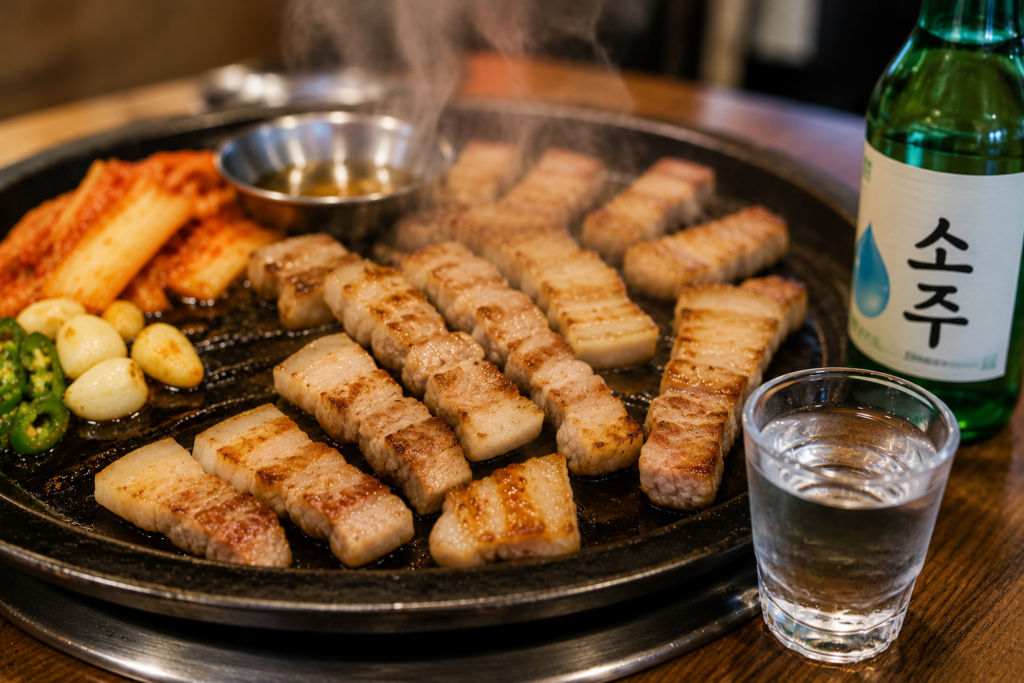
    The sound of rain hitting the ground strangely feels similar to the sizzling sound of pork belly grilling on a hot pan, or Pajeon frying in oil. That “ji-geul ji-geul” (sizzling) sound from the kitchen somehow matches the mood of a rainy day perfectly.

    Somehow, hearing rain outside just makes Koreans think of sizzling food. We hear the rain, and our brains instantly go: “Yep, time to eat something crispy and hot.” It’s a beautiful Korean food tradition that has passed down through generations.

    Samgyeopsal Means Soju

    Of course, Koreans rarely eat Samgyeopsal alone. Rainy days usually mean food and alcohol together, making it a core part of Korean drinking culture.

    When the pork belly turns golden brown, you dip it into salt or Ssambjang (a savory Korean dipping sauce made of seasoned soybean paste), wrap it in lettuce, and get ready for the perfect bite. But first comes the Soju (Korean distilled liquor).

    Koreans even have a universal, unwritten rule after tossing back a cold shot of soju:

    “캬~!” (Kyah~!)

    Then comes the bite of pork belly. Honestly, on a rainy night, that combination just hits differently.

    ChatGPT Image 2026년 5월 27일 오전 12 01 00 1024x683

    Pajeon and Makgeolli Are a Famous Combination

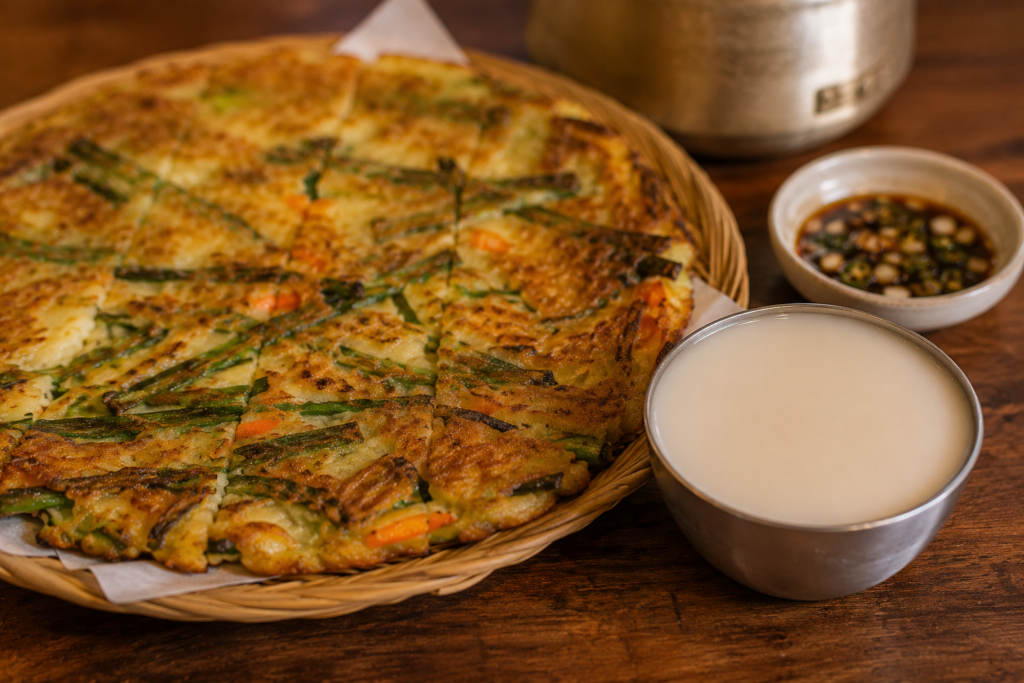
    If Samgyeopsal feels a bit too heavy, another classic choice is Pajeon (savory green onion pancake).

    It’s crispy on the outside, soft inside, and full of fresh green onions. You dip it into soy sauce mixed with onions and peppers, then take a sip of cold Makgeolli—a milky, slightly sweet Korean rice wine.

    For many Koreans, this combination almost feels like part of the rainy weather itself. It is the ultimate Korean comfort food. It warms up your body instantly and gives you a soft, relaxing buzz that perfectly counters the gloomy weather.

    ChatGPT Image 2026년 5월 27일 오전 12 02 13 1024x683

    “It’s Raining, So We Should Drink”

    These days, Koreans don’t just stop at Samgyeopsal or Pajeon. We also line up for things like Gopchang/Makchang (rich, chewy grilled intestines) or a hot bowl of Odeng-tang (fish cake soup in hot, savory broth). This is the quintessential Seoul rainy day food lineup.

    But honestly, the food is only part of it. Rainy days in Korea have a certain emotional mood. We just use the rain as an excuse to slow down, meet friends, and drink together—sharing “Jeong” (정), that unique Korean feeling of deep connection, warmth, and looking out for your friends.

    So if you ever visit Korea and it suddenly starts raining, don’t feel disappointed that your outdoor plans are ruined. Instead, walk into a small, cozy local restaurant, order some Samgyeopsal or Pajeon, pour yourself a drink, and enjoy one of the most authentic Korean feelings you can experience on a rainy night.

    ChatGPT Image 2026년 5월 27일 오전 12 03 46 1024x683

    💬 What About You?

    What food do people in your country crave on rainy days? Is there a special drink you always look for when it pours?

    Let me know in the comments below!