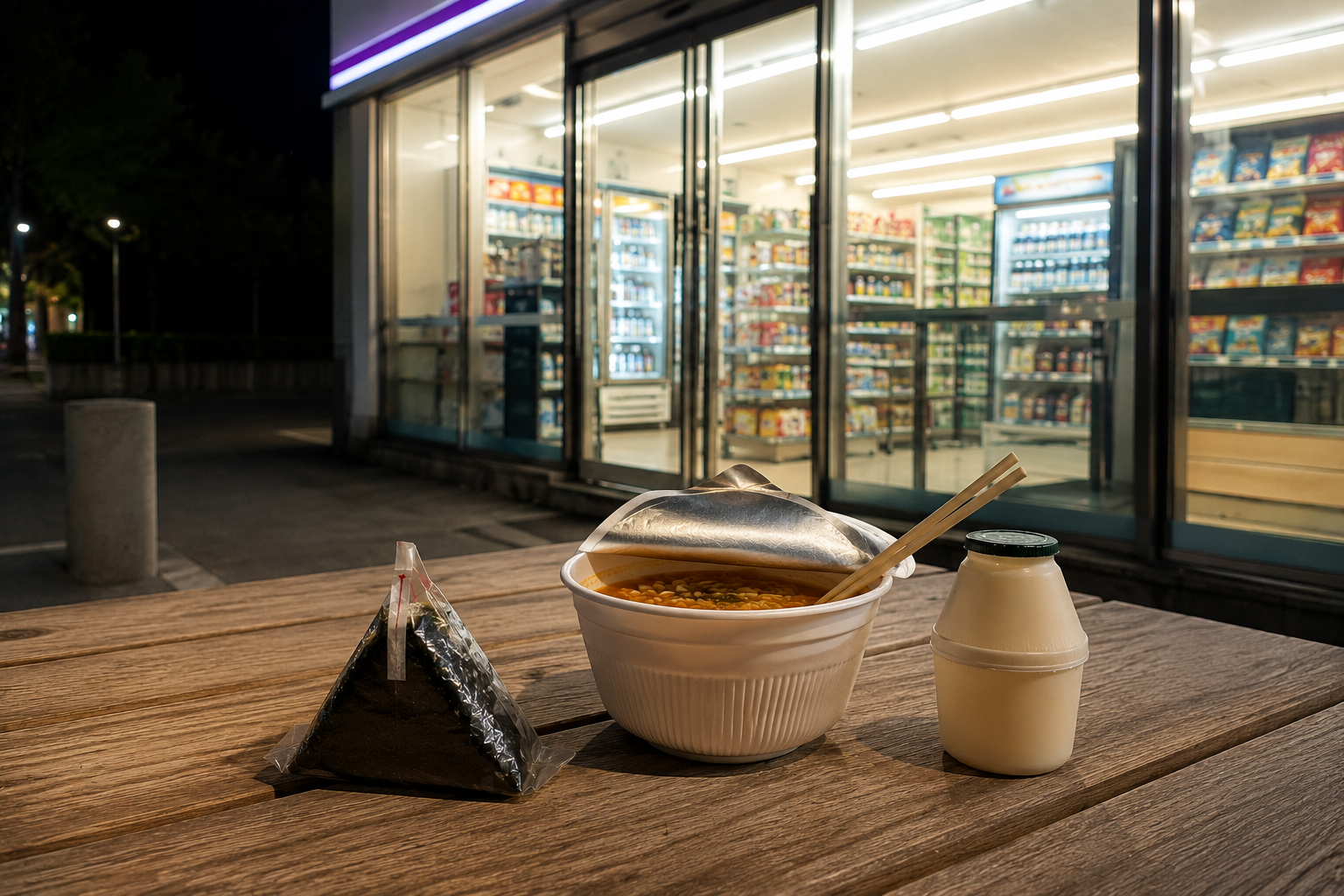
One of the first things many foreign visitors notice in Korea is the number of convenience stores. No matter where you go, there always seems to be one nearby. There is a convenience store on the way to school. There is one near the bus stop, another near the office, and usually at least one inside or next to a residential apartment complex. Sometimes it feels like you can walk for only a few minutes before spotting another one. That is probably one of the biggest reasons Koreans visit convenience stores so often. They are simply everywhere.
For students, convenience stores are often part of their daily routine. Many Korean students attend private academies after school, which means they do not always have enough time for a proper meal before heading to their next class. A convenience store becomes an easy solution. Most stores have tables where customers can sit and eat. There are microwaves for heating food and hot water dispensers for instant noodles. It is common to see students grabbing a triangle kimbap, a cup of ramen, or a simple ready-made meal before rushing off to an academy.
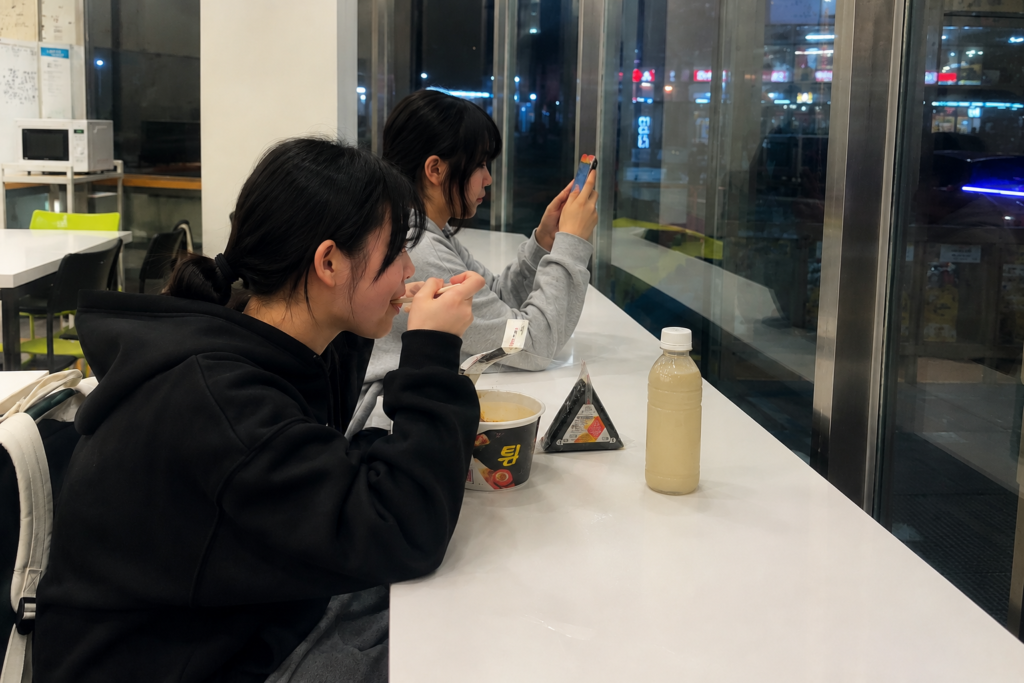
Office workers have their own reasons for stopping by. Someone who skipped breakfast might walk into a convenience store on the way to work and think, “Maybe I’ll just grab a triangle kimbap and a coffee.” It is a quick, affordable way to get through a busy morning.
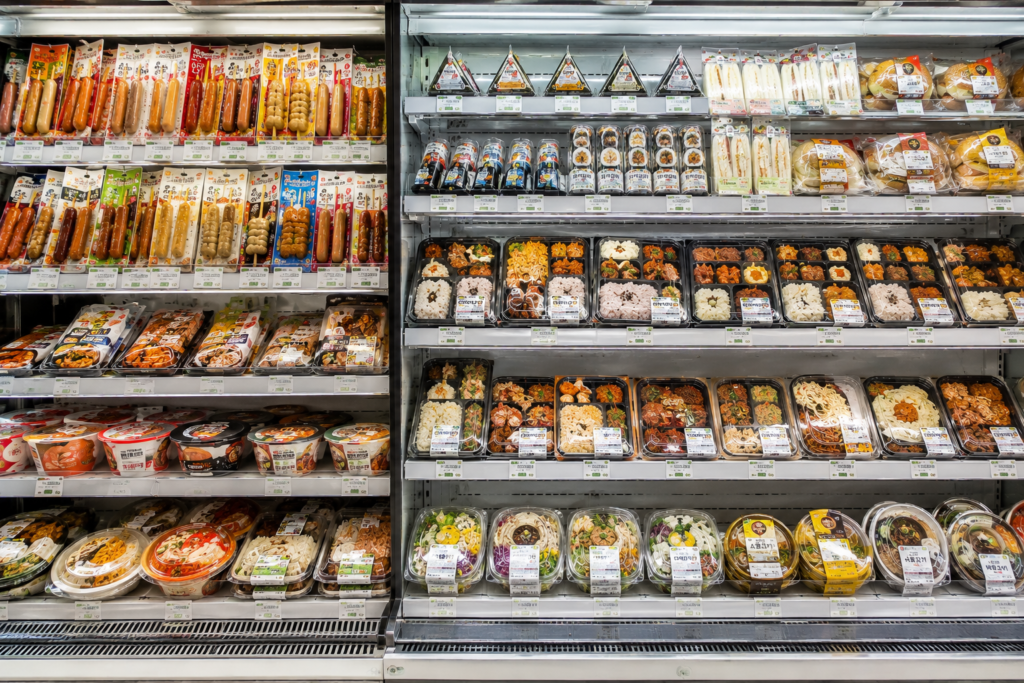
Convenience stores are also popular after work. Sometimes people get home, look inside the refrigerator, and realize they do not feel like cooking. Instead, they head downstairs to the nearest convenience store and pick up a lunch box, instant noodles, or a few snacks for dinner. Convenience store lunch boxes are especially popular in Korea. For just a few thousand won, you can get rice, meat, and several side dishes in one meal. Students, office workers, and even elderly customers regularly buy them.
Late at night, convenience stores become useful in a different way. After spending time with friends and having a few drinks, many people stop by a convenience store before going home. Some buy a hangover relief drink. Others grab a cup of ramen and sit down for a quick late-night meal before heading home. Because most convenience stores operate 24 hours a day, they remain one of the few places that stay open when almost everything else is closed.
They can even be helpful when unexpected situations happen. If you suddenly need basic medicine late at night and nearby pharmacies are already closed, many convenience stores sell common over-the-counter essentials.
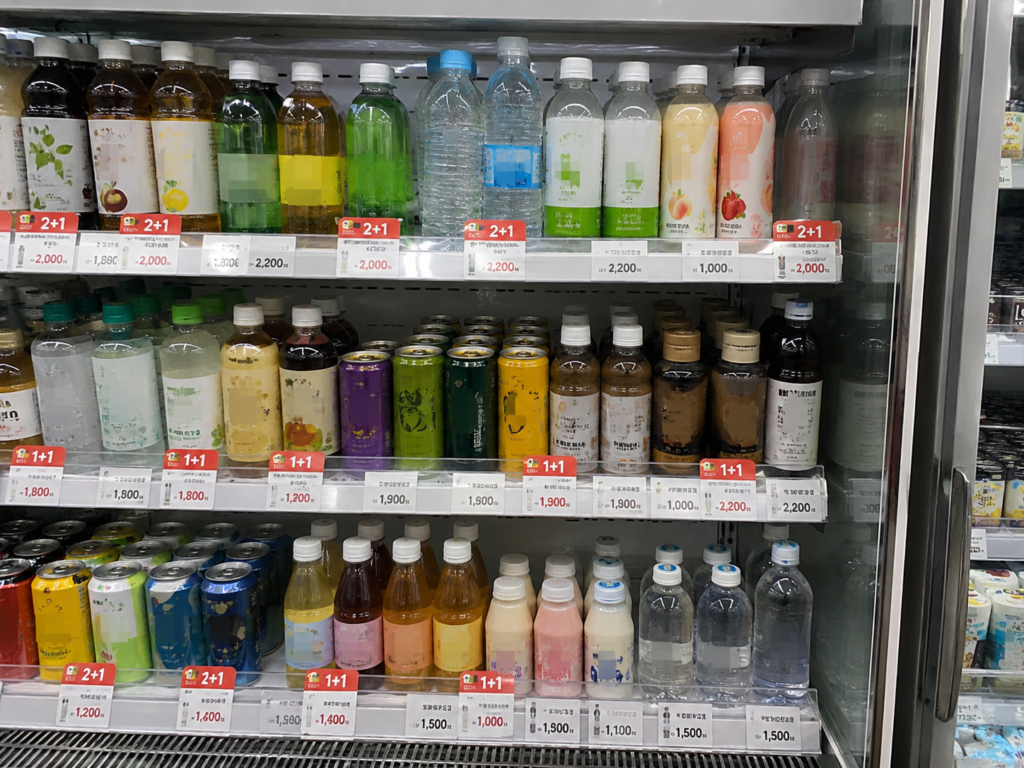
Another interesting part of Korean convenience store culture is the famous “1+1” and “2+1” promotions. These deals are especially common in the drink section. Many people walk into a convenience store planning to buy one drink and leave with two. You will often hear friends saying, “Hey, this one is 1+1. Want the extra one?” Sometimes they even play rock-paper-scissors to decide who pays. It is a small moment, but a very familiar one for many Koreans.
Korea has several major convenience store brands, including CU, GS25, 7-Eleven, and Emart24. These companies constantly compete by releasing new lunch boxes, desserts, drinks, and limited-edition products. As a result, many people stop by convenience stores not because they need something, but simply because they are curious about what is new.
For Koreans, convenience stores are not considered special places. They are simply part of everyday life. When people are hungry, thirsty, in a hurry, or suddenly need something, a convenience store is often the first place that comes to mind. Perhaps Koreans visit convenience stores so often not because they are extraordinary, but because they are always there when needed.
If you ever visit Korea, try counting how many convenience stores you pass during a ten-minute walk. The number might surprise you.
Leave a Reply