There is a fascinating ritual that happens at every Korean BBQ table.
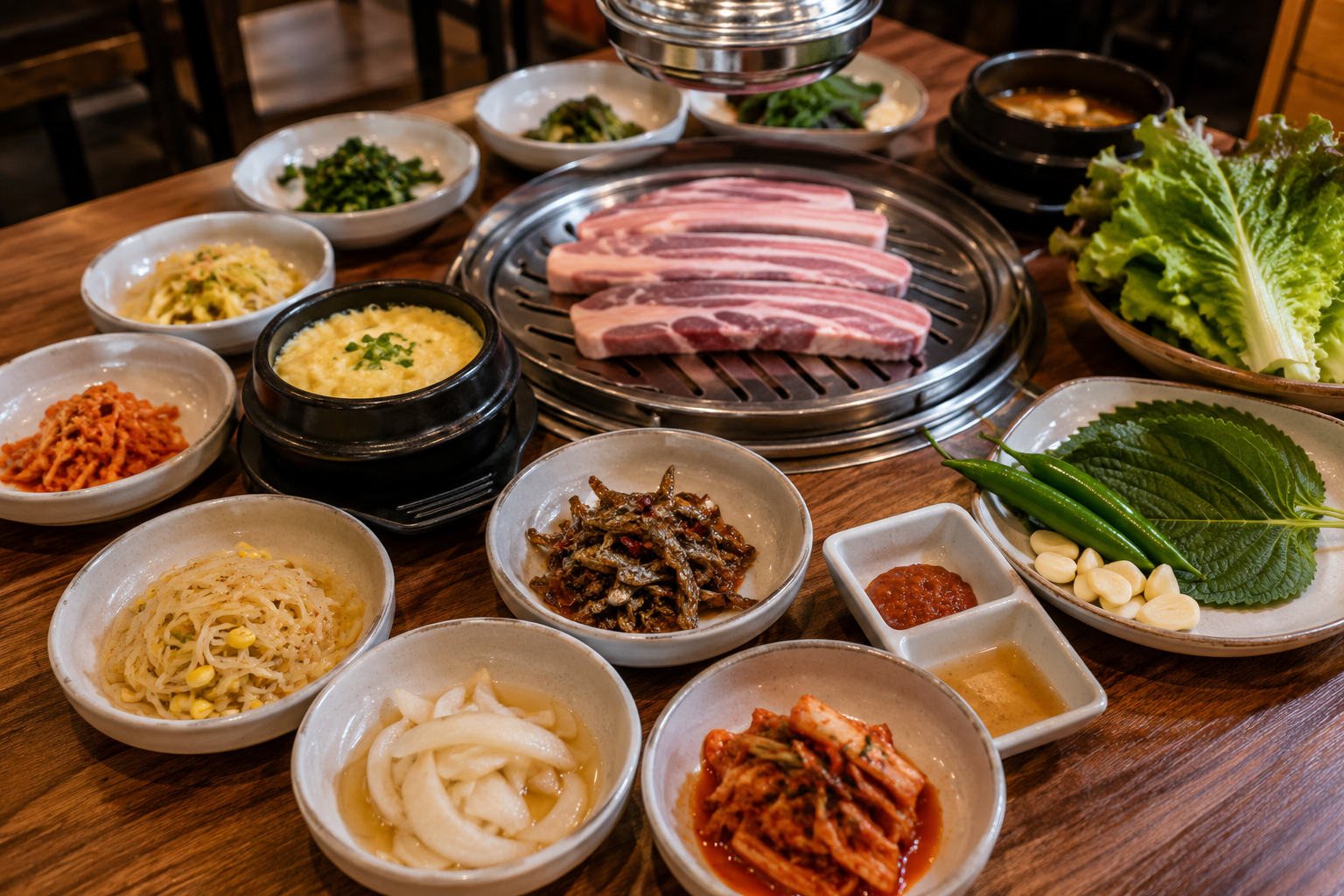
If you visit a Samgyeopsal (pork belly) restaurant in Korea for the first time, you will witness a scene that looks like a delicious, high-stakes game of Jenga.
It’s the art of “Ssam” (쌈)—the unique Korean culture of wrapping food in leafy vegetables.
To Koreans, this is second nature. But to travelers, watching locals construct and consume a wrap is nothing short of a theatrical performance. They don’t just eat the meat; they build an entire flavor universe inside a single leaf.

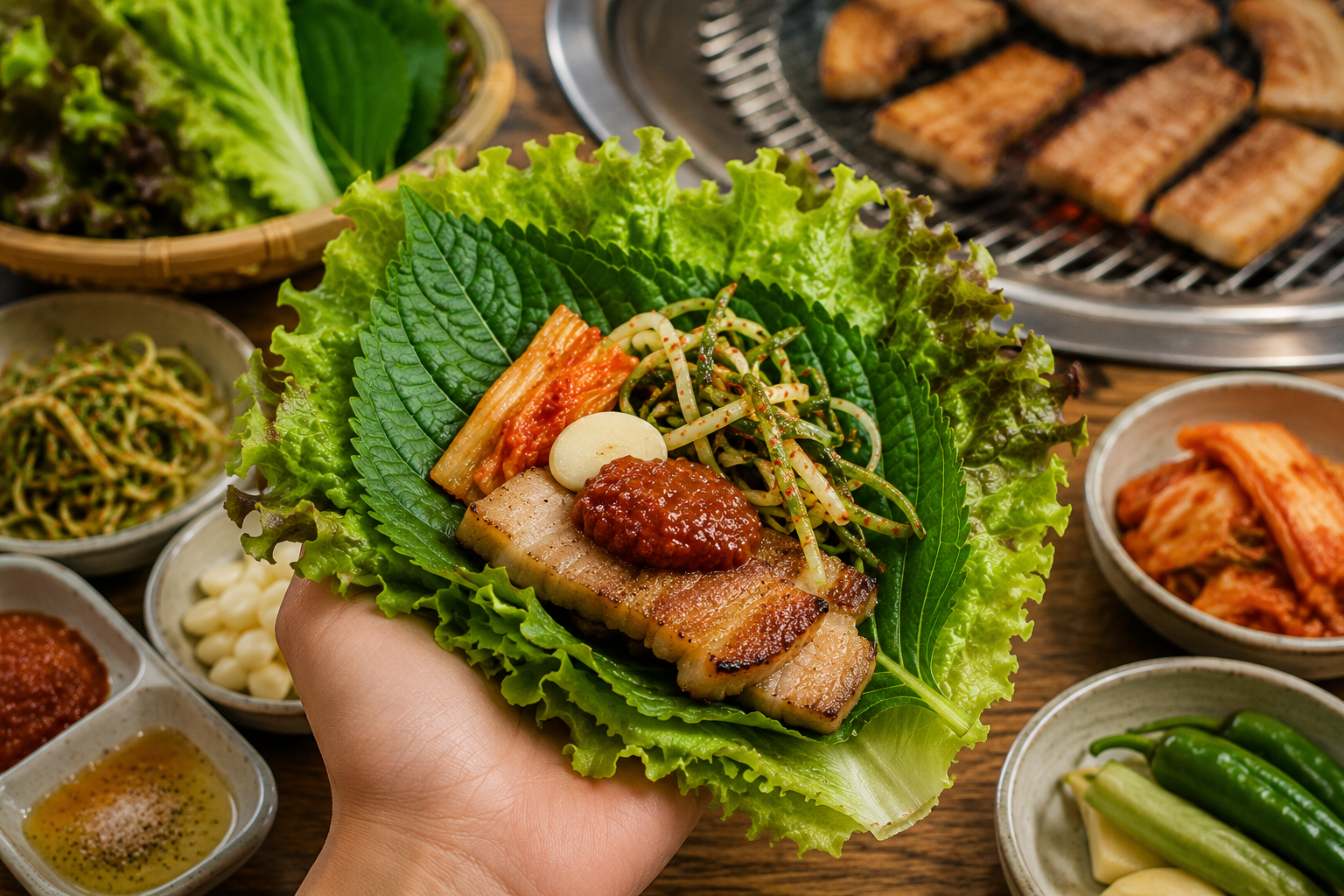
Imagine this: a Korean diner picks up a piece of lettuce or a perilla leaf. Then, the layering begins. First goes a thick piece of grilled pork belly. Next, a dollop of Ssamjang (savory, fermented bean sauce). Then comes a slice of raw or grilled garlic, followed by a strip of spicy scallion salad, and maybe a piece of grilled Kimchi. Some people even add a small spoonful of hot rice. By the time the masterpiece is finished, the wrap is easily the size of a small fist. And this is the exact moment where first-time visitors gasp.
“Are they really going to eat that in one bite?” “There’s no way that fits.”

But before they can finish the thought, the Korean diner opens their mouth incredibly wide and pops the entire, giant wrap inside in one clean motion. No biting it in half, no dropping a single ingredient. To an outsider, it looks impossible, almost aggressive. But to Koreans, eating a Ssam in one bite is the ultimate satisfaction. The magic lies in the explosion of flavors. The moment you chew, the richness of the pork, the salty punch of the Ssamjang, the sharp kick of garlic, and the fresh crunch of the lettuce all combine in your mouth at once. If you bite it in half, the juices leak out, the structure collapses, and the magic is lost.
This culture is so deeply rooted that most Koreans feel a strange sense of emptiness if they eat grilled meat without wrapping it. Some people believe that the tradition may be connected to “Bokssam” (wrapping luck), a custom in which people wrapped rice in seaweed or leafy greens during the Lunar New Year to wish for good fortune. Later, during times when meat was scarce, wrapping a small piece of pork with plenty of vegetables was a practical way to feed a whole family while making meals feel more satisfying and balanced.

Today, the obsession with Ssam has created a fun divide among locals: The Lettuce Team versus The Perilla Leaf Team. Those who prefer lettuce love it for its clean, refreshing crunch that lets the flavor of the meat shine. On the other hand, the Perilla Leaf (Kkaen-nip) loyalists argue that its unique, herbal, and slightly minty aroma is what elevates Korean BBQ to the next level. Some hardcore foodies won’t even touch a piece of pork belly if perilla leaves aren’t on the table. And it doesn’t stop at just these two. If you venture deeper into Korean dining, you’ll encounter greens like Dangwi (Korean angelica), which has a strong, medicinal herbal scent that can be surprising at first but is something many Koreans grow to enjoy over time, as well as kale, chicory, and romaine.
The best part about Ssam culture? There is absolutely no right or wrong answer. Whether you stack three leaves together, double up on garlic, or skip the rice entirely, it’s a culinary sandbox where you are the chef of your own bite. The culture is still evolving today—with people wrapping raw fish (Hoe), using pickled radish slices (Ssam-mu), or even experimenting with fusion styles like using tortillas.
So, when you find yourself at a Korean BBQ restaurant, don’t be shy. Grab a leaf, pile it high with whatever catches your eye, open your mouth as wide as you can, and dive into the beautiful, chaotic, and delicious world of Ssam.
Now I’m curious. Have you ever tried making a Korean Ssam? What is your ultimate combination of ingredients? 🍖🥬