Tag: Soju

  • “Rainy Day, Drinks?” — Why Koreans Crave Samgyeopsal and Pajeon When It Rains

    “Rainy Day, Drinks?” — Why Koreans Crave Samgyeopsal and Pajeon When It Rains

    It’s a gloomy afternoon in Seoul, and the rain is starting to pour. You’d think people would want to rush home, wrap themselves in blankets, and watch Netflix, right?

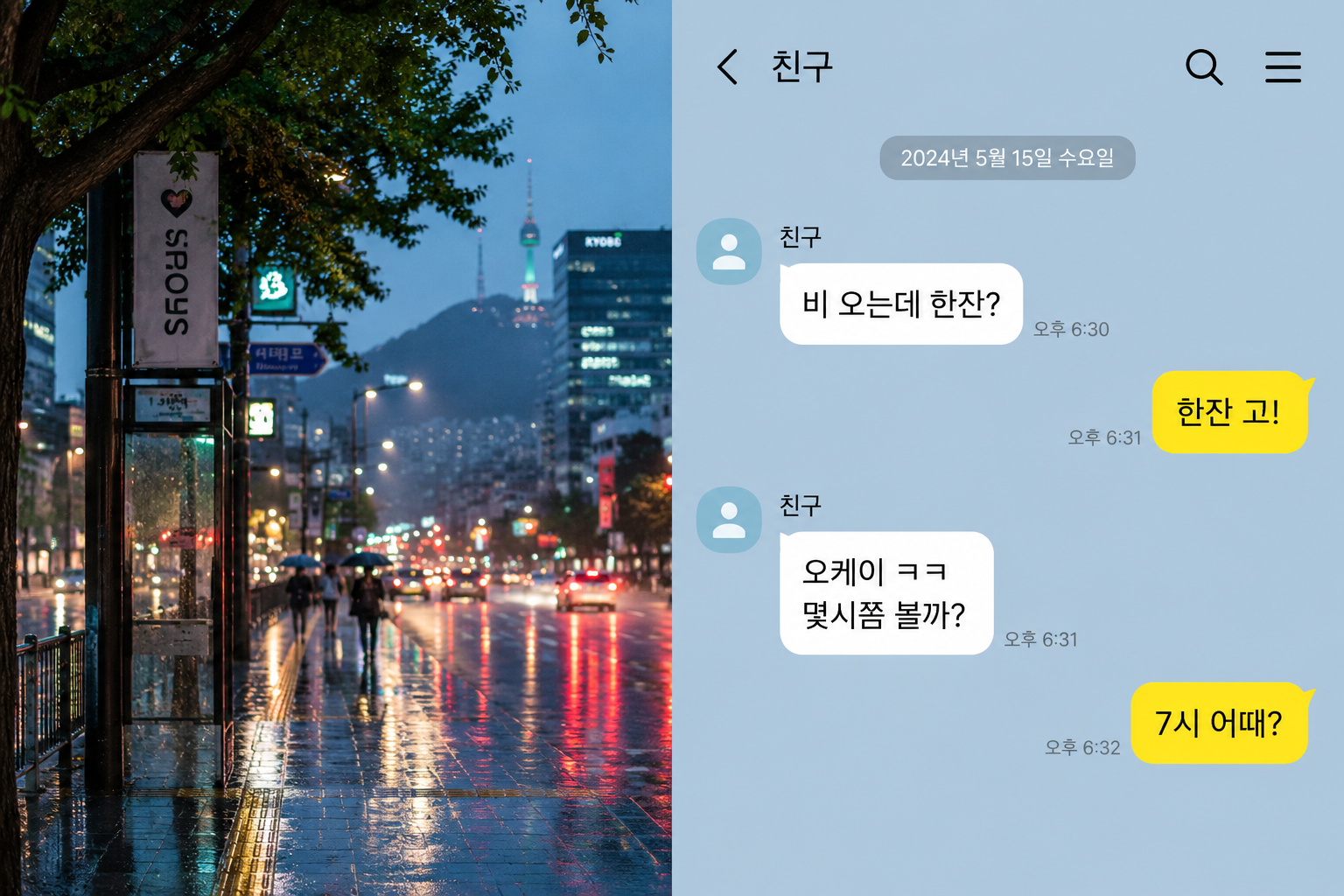
    But then, my phone vibrates. It’s a text from a friend. It simply says: “비 오는데 한잔?” (Bi-oh-neun-de han-jan? / It’s raining… want to grab a drink?)

    Without a second thought, I text back: “한잔 고!” (Han-jan GO! / I’m in. Let’s do it!)

    And just like that, plans are made. On rainy days, this kind of message is extremely common in Korea. It might sound simple, but for Koreans, rainy days and drinking with friends somehow just go together.

    For many of us, this unique Korean rainy day culture makes certain foods impossible to resist. The two biggest classics are Samgyeopsal (Korean pork belly) and Pajeon (savory Korean pancake with green onions). But why? As your local Korean friend, let me break down the real vibe behind this.

    Why Do Koreans Crave These Foods When It Rains?

    Many Koreans have an interesting theory about this.

    The sound of rain hitting the ground strangely feels similar to the sizzling sound of pork belly grilling on a hot pan, or Pajeon frying in oil. That “ji-geul ji-geul” (sizzling) sound from the kitchen somehow matches the mood of a rainy day perfectly.

    Somehow, hearing rain outside just makes Koreans think of sizzling food. We hear the rain, and our brains instantly go: “Yep, time to eat something crispy and hot.” It’s a beautiful Korean food tradition that has passed down through generations.

    Samgyeopsal Means Soju

    Of course, Koreans rarely eat Samgyeopsal alone. Rainy days usually mean food and alcohol together, making it a core part of Korean drinking culture.

    When the pork belly turns golden brown, you dip it into salt or Ssambjang (a savory Korean dipping sauce made of seasoned soybean paste), wrap it in lettuce, and get ready for the perfect bite. But first comes the Soju (Korean distilled liquor).

    Koreans even have a universal, unwritten rule after tossing back a cold shot of soju:

    “캬~!” (Kyah~!)

    Then comes the bite of pork belly. Honestly, on a rainy night, that combination just hits differently.

    Pajeon and Makgeolli Are a Famous Combination

    If Samgyeopsal feels a bit too heavy, another classic choice is Pajeon (savory green onion pancake).

    It’s crispy on the outside, soft inside, and full of fresh green onions. You dip it into soy sauce mixed with onions and peppers, then take a sip of cold Makgeolli—a milky, slightly sweet Korean rice wine.

    For many Koreans, this combination almost feels like part of the rainy weather itself. It is the ultimate Korean comfort food. It warms up your body instantly and gives you a soft, relaxing buzz that perfectly counters the gloomy weather.

    “It’s Raining, So We Should Drink”

    These days, Koreans don’t just stop at Samgyeopsal or Pajeon. We also line up for things like Gopchang/Makchang (rich, chewy grilled intestines) or a hot bowl of Odeng-tang (fish cake soup in hot, savory broth). This is the quintessential Seoul rainy day food lineup.

    But honestly, the food is only part of it. Rainy days in Korea have a certain emotional mood. We just use the rain as an excuse to slow down, meet friends, and drink together—sharing “Jeong” (정), that unique Korean feeling of deep connection, warmth, and looking out for your friends.

    So if you ever visit Korea and it suddenly starts raining, don’t feel disappointed that your outdoor plans are ruined. Instead, walk into a small, cozy local restaurant, order some Samgyeopsal or Pajeon, pour yourself a drink, and enjoy one of the most authentic Korean feelings you can experience on a rainy night.

    💬 What About You?

    What food do people in your country crave on rainy days? Is there a special drink you always look for when it pours?

    Let me know in the comments below!